


The Memory of the Vehicle
Why the automotive industry’s next competitive advantage won’t come from better inspections—it will come from understanding vehicle condition across time.
In brief: Most vehicle inspections capture a single moment. This feature follows one composite SUV from the assembly plant through rental, auction, fleet lease and lease-end to show why the industry’s harder question is when damage happened and what came before it — and why vehicle condition needs a persistent record that follows the car, the way CRM did for customers and the longitudinal record did for patients.
Part 1: The Work Begins After the Inspection
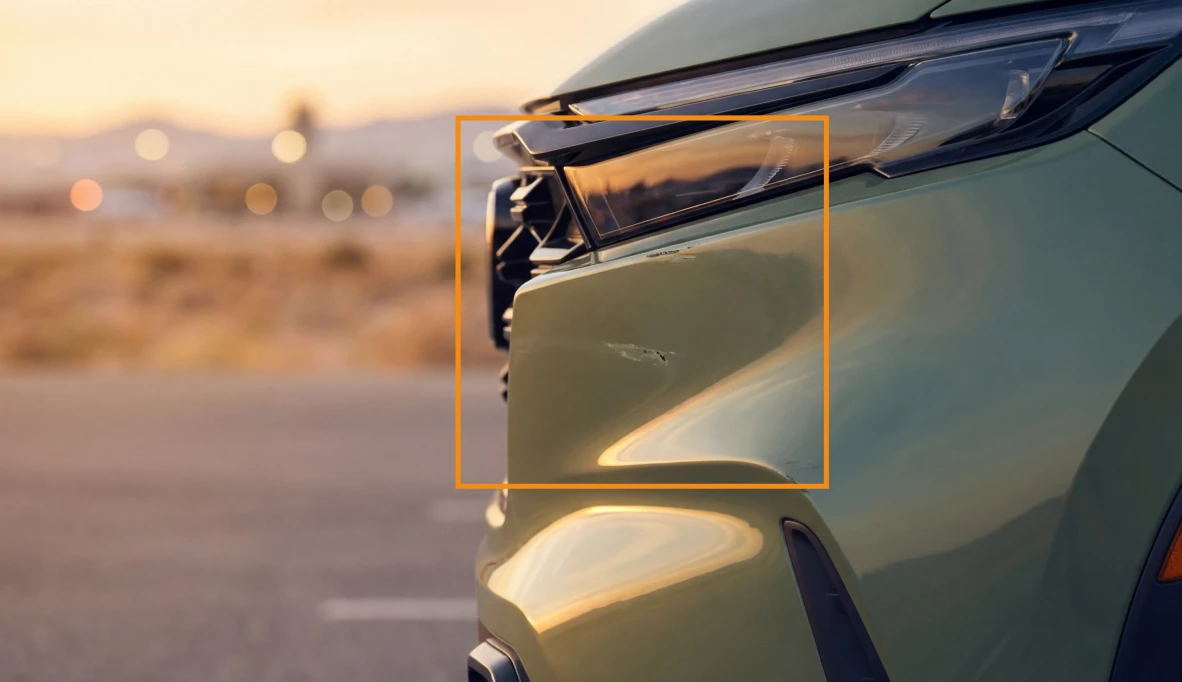
The inspection takes eleven minutes. By half past nine the return lane at a dealership on the edge of a Midwestern city is already full: a delivery van behind a pickup with a cracked taillight, two SUVs under the canopy still carrying dust from a weekend on county roads. A customer stands beside the grey one, four years old, with a coffee in one hand and the keys in the other, while an inspector walks it with a phone. Front bumper, hood, each wheel, both sides, roof, tailgate. He crouches to photograph a scrape on the lower edge of the rear bumper and stands up without saying anything. Mileage, 74,300. Tires. Windshield clean. Low on the passenger rear door a crease about the width of a hand catches the light, and he photographs that too. “Anything else?” the customer asks. He shakes his head. “We’ll send the report over.” She signs two pages, hands over the second key, and is gone before ten.
The File Opens
Inside the office, the inspection has just begun.
The report is uncomplicated: twelve photographs, one cosmetic dent, one scrape, no mechanical concerns. If the report were all anyone needed, the file would close before lunch. Instead the lease-end analyst at the finance company that wrote the closed-end commercial lease, who will decide whether the customer is billed for the crease, opens it on a Wednesday with about forty others open beside it and asks the question that fills the rest of the week: when did that crease first appear?
The report goes under older documents. The delivery photographs from 2023 show the passenger side from an angle, with the delivery truck’s shadow across the lower panel; she zooms in until the image breaks into pixels. A repair invoice from the second year of the lease mentions a door and does not say which one, because body shops write invoices for whoever is paying, not for whoever reads them three years later. The service history shows oil changes at roughly the right intervals, a recall completed, and nothing about a door. A call goes to the dealer’s service manager, who thinks he remembers the car and is not sure.
Nobody in the office is discussing the inspection anymore.
There are no raised voices and nothing to discover. A transport photograph turns out to matter because a driver happened to catch the passenger side while loading the car onto a carrier eighteen months earlier, and it shows nothing. An oil-change record settles nothing but confirms where the vehicle was during one particular week. The body-shop invoice becomes important for a line about trim that nobody thought about at the time. Each document was created for its own reason, by someone finishing that day’s work, and each is now being asked a question it was never written to answer.
“Each document was created for its own reason, by someone finishing that day’s work, and each is now being asked a question it was never written to answer.”
Two States Away, the Same Afternoon
Walk into a lease-return center two states away and the conversation sounds the same. Different vehicle, different damage, and someone is still looking for older photographs, still opening invoices, still trying to remember whether the repair happened before or after the customer took possession. Across the industry it happens millions of times a year, and every time someone decides whether the damage is new, whether it was disclosed, whether it was repaired and whether it matters, from whatever paperwork has survived.
The analyst’s job description says she assesses excess wear and use. Most days the work is assembling a sequence of events from documents that were each written for some other purpose, by people who did not expect them to be read again.
Friday
On the Friday she finds another inspection, three years old, on different software: the auction’s condition report from the sale just before the lease began. The image quality is poor, but the passenger door is visible for a moment before whoever held the phone turned toward the rear wheel. She enlarges the frame, then enlarges it again. The crease might already be there. It might be the reflection of the building behind the car. She sits back. “I don’t think we can charge it.” There is nothing certain enough to charge on, so the cost of the doubt goes to the residual, which is to say to the people who priced the lease three years ago, on a forecast, without ever seeing the car.
By early afternoon a porter has driven the SUV to the reconditioning bay, the report has been filed, and the office has started the next return: another vehicle, another inspection, another question that begins with something visible and turns into everything that came before it.
Before the Lease
There is one thing about the file that nobody had time to notice. The car arrived at the dealership in 2023 as a certified pre-owned vehicle, which means it had a life before the lease, and that life is not in the file at all. The delivery photographs are the beginning of the record. They are not the beginning of the vehicle.
Part 2: Following the Vehicle
Spring 2022
Plant & truck
14 months, 61 rentals
Rental
2023
First auction
2023–2026
Closed-end commercial fleet lease
2026
Lease-end inspection
Autumn 2026
Second auction
November
Third owner
Three Years in a Fleet
The lease began in the late summer of 2023. A regional engineering firm took the SUV, freshly reconditioned and on new tires, into a pool of eleven vehicles used by field staff and managed by an office administrator with a spreadsheet, a fuel-card portal and a shared-drive folder called “Vehicles”. The delivery photographs, the ones that would matter three years later, were the salesman’s.
NAFA, the fleet management association, says its members are responsible for more than 4.8 million vehicles and control assets and services worth more than $122 billion. Ask anyone who runs a few hundred of them what Monday looks like and it is rarely an inspection report. It is two vans, bought the same month, with the same mileage, on the same routes, one of which costs a third more to keep on the road, and no single document that says why. The answer is in the sequence: a driver who curbed the wheels for a year, a repair done cheaply, a service interval that slipped, a small collision that never reached the insurer because it fell under the deductible.
4.8M+
vehicles NAFA members are responsible for
$122B+
in assets and services they control
Source: NAFA, the fleet management association
The SUV’s own sequence was ordinary. Two drivers, then three. A tire-pressure warning ignored for a month. A minor collision in a parking lot in the second year, unreported, repaired at a local body shop for cash; that is the invoice for the door. A recall, completed. And somewhere in the third year, the crease low on the passenger rear door, which nobody remembers.
The First Auction
The dealer had bought it a few weeks before the lease at a wholesale auction three states away, where a condition report was written by an inspector who had never seen it and had no way of knowing where it had spent the previous fourteen months, or that the bumper cover was not the original. The finish on the bumper cover did not quite match the fenders, and he caught it by eye and noted it as refinished, graded the vehicle, and it sold on its second run. Manheim, the largest wholesale auction operator in North America, says listings that include condition information sell up to three times more often than those without it. The inspector wrote down what he could see, and it was enough to sell the car.
Up to 3×
more often sold: listings with condition information, against those without it
Source: Manheim
Fourteen Months as a Rental
Before the auction, the SUV had spent fourteen months as a rental car, defleeted at 31,000 miles. It was rented 61 times and inspected, in some form, at the start and end of each rental: a walkaround, a set of photographs, sometimes a paper diagram with a circle drawn on it. In its ninth month a customer reversed it into a bollard in a parking garage. The bumper cover was replaced. The customer disputed the damage claim, and a branch manager settled it in about ninety seconds at the counter, on the return photographs and, eventually, the customer’s own admission. The claim went into the claims system, the invoice into the maintenance system, the photographs stayed in the inspection app, the agreement in the reservation system. Four records of one event, in four places.
“Four records of one event, in four places.”
Avis Budget reported roughly 38 million rental transactions worldwide in 2025, across an average fleet of about 684,000 vehicles, and every transaction has a condition event at each end. The people who run a branch do not experience this as a data problem. They experience it as Tuesday: a customer who says the scratch was already there, a manager who has to decide before the queue gets longer, and a car that has to be back on the lot by four.
~38M
rental transactions worldwide in 2025
~684K
vehicles in the average fleet
Source: Avis Budget
Spring 2022: The Plant and the Truck
Before the rental lot it was on a truck, and before the truck a rail car, and before that an assembly plant in the South in the spring of 2022. At each handover someone signed for it. The driver’s delivery form, filled in at a rental facility near a large airport, and the bill of lading before it both noted no damage, in two companies’ systems that would never think to look at each other. That is where the record begins, on a form nobody has opened since.
Part 3: Years Later
Two SUVs, One Lane
It ran through the auction lanes again in the autumn of 2026. A different inspector wrote a different report: the painted bumper, the passenger rear door, which the gauge gave away, the crease, a rear tire newer than the other three. On the same afternoon, in the same lane, a second SUV of the same model and year, with almost the same mileage, ran two units behind it and sold for eleven hundred dollars more. The reports explained some of that gap. The rest was in the four years before: the 61 rentals, the bollard, the cash repair, the three engineers who shared the keys. The second vehicle had been a single-driver company car, garaged, serviced by the dealer that sold it. The lane does not know any of that, but experienced buyers read a story out of small things, a mismatched tire, a panel slightly too glossy, and they price the story.
J.D. Power, whose forecasts underpin lease pricing, lists mileage and condition among the variables that decide what a vehicle is actually worth at lease-end, as opposed to what was assumed when the lease was written. No single repair moves that number. Twenty ordinary decisions, most of them made by people who had no idea they were deciding anything about residual value, usually do.
The Third Owner
The dealer who bought the SUV sold it in November to a woman who wanted a reliable car for a long commute. She asked about accident history. He showed her a vehicle history report, which listed the recall, both auction sales, its time as a rental car and in a commercial fleet, and no accidents, because the bollard was a rental claim, the cash repair was never reported, and the crease was never anything at all. The report told her the car had worked for a living; it could not tell her what that work had done to it. He was reading her the records that had reached him.
Part 4: The Question Nobody Set Out to Answer
The Same Scene in Every Department
Spend enough time with people who handle vehicles for a living and the same scene repeats in departments that never talk to each other: the analyst reconstructing a door; the branch manager deciding whether a scratch was already there; the claims adjuster who, faced with a photograph of a dented quarter panel, spends almost none of her time on the dent and almost all of it on when it appeared, who had the car, and whether the panel had been repaired once before; the remarketing manager explaining to a finance director why this year’s off-lease returns are coming back rougher than last year’s. None of them would say they have a data problem. Each answers from a different pile: the inspection platform, the maintenance system, the claims software, the transport system, the auction report, an ERP, a spreadsheet, an email chain, a shared drive. Alphabet, the BMW-owned fleet-management company, found in its 2026 survey of European fleet managers that the most-cited digitalization challenge, for the third year running, was integrating the tools they already had.
3rd year
in a row that integrating existing tools was fleet managers’ most-cited digitalization challenge
Source: Alphabet, 2026 survey of European fleet managers
What a Detection Cannot Say
It is not that the inspection has stood still. Anyone who did this work fifteen years ago remembers the clipboard, and can tell you how much better it has become: the phone replaced the clipboard, the photograph replaced the circle on the diagram, and in the last few years machines began reading the photograph, with expert reviewers checking what they found, turning a picture of a door into panel, damage type, severity, an estimate. AI inspection is the thing every vendor now claims, and it has been getting better at its task. But a detection is still a point in time. It says there is a dent on the front-left door. It does not say whether the dent was there last week, whether the door has been repaired before, who had custody when it appeared, or whether fixing it now makes sense given what the vehicle will sell for in eighteen months.
Part 5: A Different Kind of Enterprise System
What Happened to Customers, Money and Patients
Every other kind of enterprise information went through this. CRM turned sales calls and business cards into a customer history any salesperson could pick up; ERP turned departmental ledgers into one account of the company; medicine had the clearest version, where a longitudinal patient record is worth more than any single visit because each observation gains meaning from the ones before it. Automotive has bought all of those systems. It has not applied the idea to the physical condition of the vehicle, which remains, in most organizations, a series of separate events owned by whichever department was holding the keys.
A Layer Beneath the Systems
Nothing would need replacing. What is missing is a layer beneath the existing systems that holds one persistent object, this VIN and its physical condition, and keeps the inspections, photographs, repairs, custody handovers and claims attached to it as it moves: a system of record for vehicle condition, the place the analyst would have looked first and found the delivery photographs, and the cash repair matched to the door it was for, in about the time the inspection itself took.
Part 6: Giving the Problem a Name
Lease-End Without the Appointment
Ken Sopp is president of Credit Union Leasing of America, and until recently the end of one of its leases worked the way it still does at most lessors: an inspector was dispatched to the lessee’s driveway, appointments backed up, and a returned car could sit for two weeks before anyone had a condition report to act on. By 2025 CULA had put the inspection in the lessee’s own hands, on a phone, guided by software from a San Diego company called Self Inspection, of which CULA is a customer. It takes about ten minutes. Sopp says 95% of lessees now choose it over waiting for an inspector, more than 11,000 have done it, and lease-end turnaround has fallen by half; those are the lessor’s figures, but the mechanism is plain: the inspection stopped being an appointment and became a record.
Credit Union Leasing of America, a Self Inspection customer
95%
of lessees choose self-inspection
11,000+
self-inspections completed
½
lease-end turnaround, cut in half
~10 min
per inspection
Figures reported by CULA.
One Record That Follows the Car
Self Inspection, founded in 2021, began in smartphone inspections and AI damage detection, backed by expert review, and arrived at the same place from the product side. Its software treats an inspection as one verified observation in a longer record of the vehicle, and it calls the result vehicle condition intelligence: verified, structured data about a vehicle’s physical condition, captured in a standard way and shared across the automotive lifecycle. “Vehicle history became a standard part of every automotive transaction,” Constantine Yaremtso, the chief executive, said when the company raised $10 million in July 2026. “Vehicle condition is going the same way. Our job is to be the source of truth for it, one record, one standard, that follows the car for its entire life.” Two of the investors in that round were an auto lender, Westlake Financial, and a tire distributor, U.S. AutoForce, and the tire distributor’s interest is the telling one. “Tire condition, specifically, is turning into one of the most valuable data layers we have,” said Chuck Dauk, chief innovation and transformation officer at U.S. Venture, AutoForce’s parent. A company that sells tires has decided that the condition of a tire, recorded and compared over time, is worth keeping for its own sake.
“Vehicle condition is going the same way. Our job is to be the source of truth for it, one record, one standard, that follows the car for its entire life. — Constantine Yaremtso, CEO, Self Inspection”
Whether the name sticks is a matter for the market. Somewhere in the Midwest a grey SUV is doing a long commute for its third owner, who was told it had no accidents; her file on it begins in November. In three or four years someone will inspect it for eleven minutes, and then the rest of the work will begin.
Editor’s note: A note on the reporting: the grey SUV, and the analyst, inspectors, dealers and owners around it, are a composite, assembled from how lease returns, rental returns, fleet operations and wholesale auctions are actually worked rather than from a single vehicle’s file. The figures from Avis Budget, Manheim, NAFA, J.D. Power and Alphabet, and everything in the final chapter, are reported and attributed.
Self Inspection captures verified, structured vehicle condition data: guided smartphone inspections with AI damage detection backed by expert review.
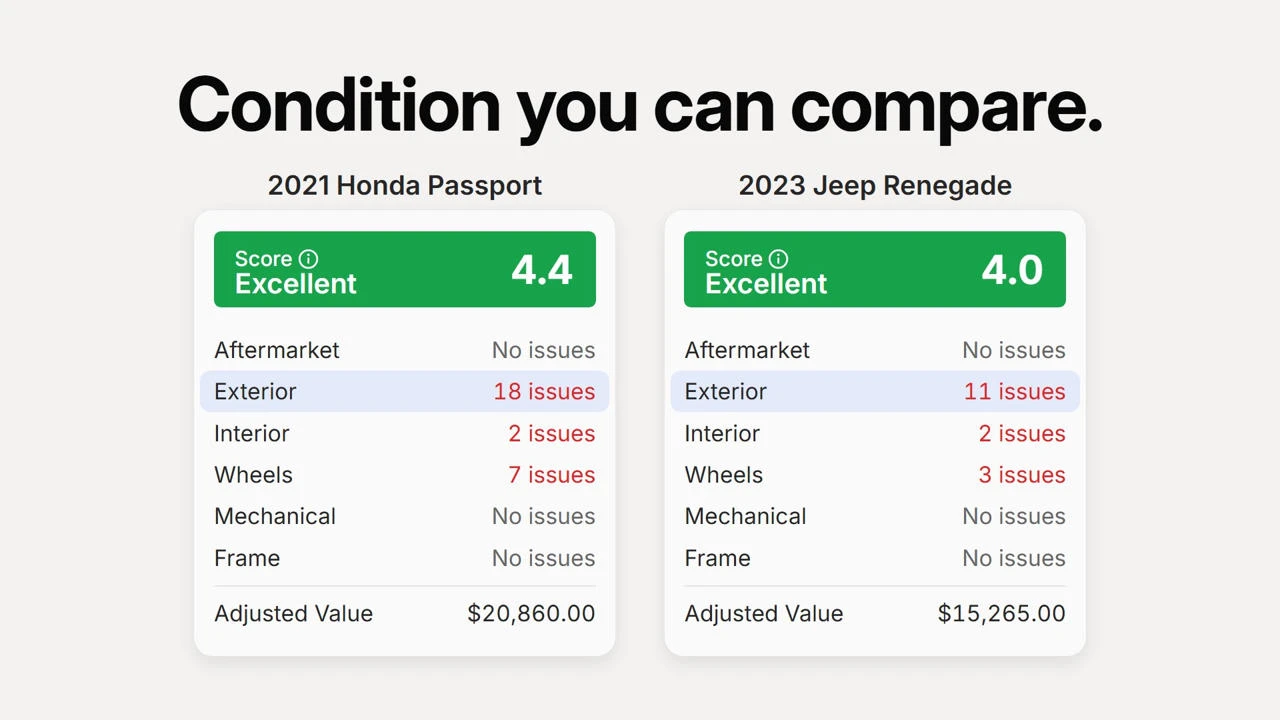
See what a condition record looks like

Ready to get started?
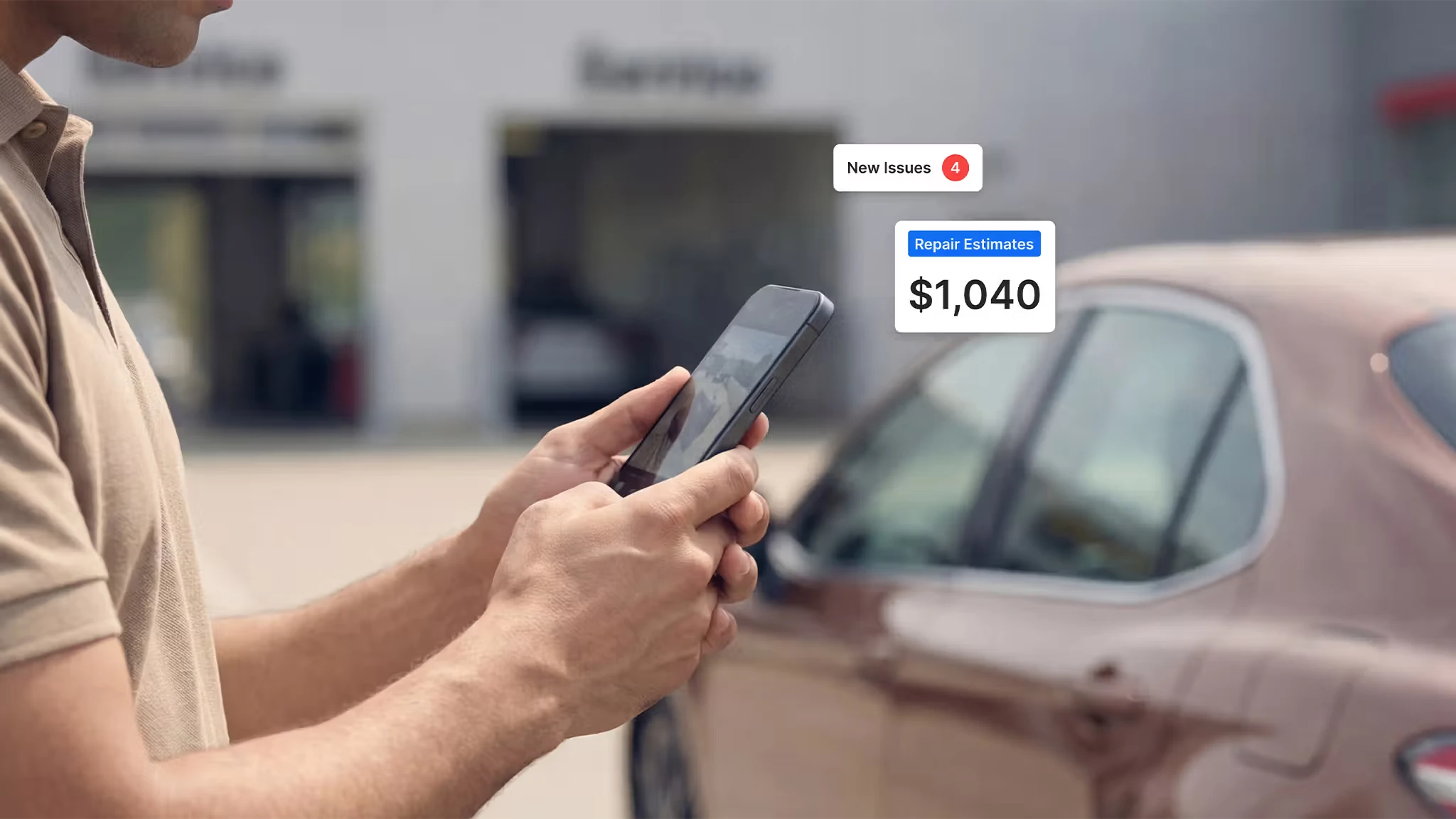
Streamline lease returns, reduce disputes and accelerate remarketing readiness - all from one simple platform.