

An AI vehicle inspection software platform
99% delivered damage detection accuracy. Mobile-first capture. Expert review on every inspection. Built for dealers, fleets, rentals, transporters, and lenders that inspect at scale.






99%
Delivered damage detection accuracy, with expert review on every inspection
1M+
Inspections completed on the platform
100%
Of findings checked by a certified expert before the report is released
What is AI vehicle inspection software?
Manual inspection is a person, a clipboard or a tablet, and a judgment call. Inspection software replaces the clipboard. AI vehicle inspection software replaces the judgment call - not the person, but the part of the job where two competent inspectors looking at the same bumper write down two different estimates.
How the platform fits together - the five layers
An inspection passes through five layers in order. Each one is independently configurable, and each one is where a different part of your organization will have questions.
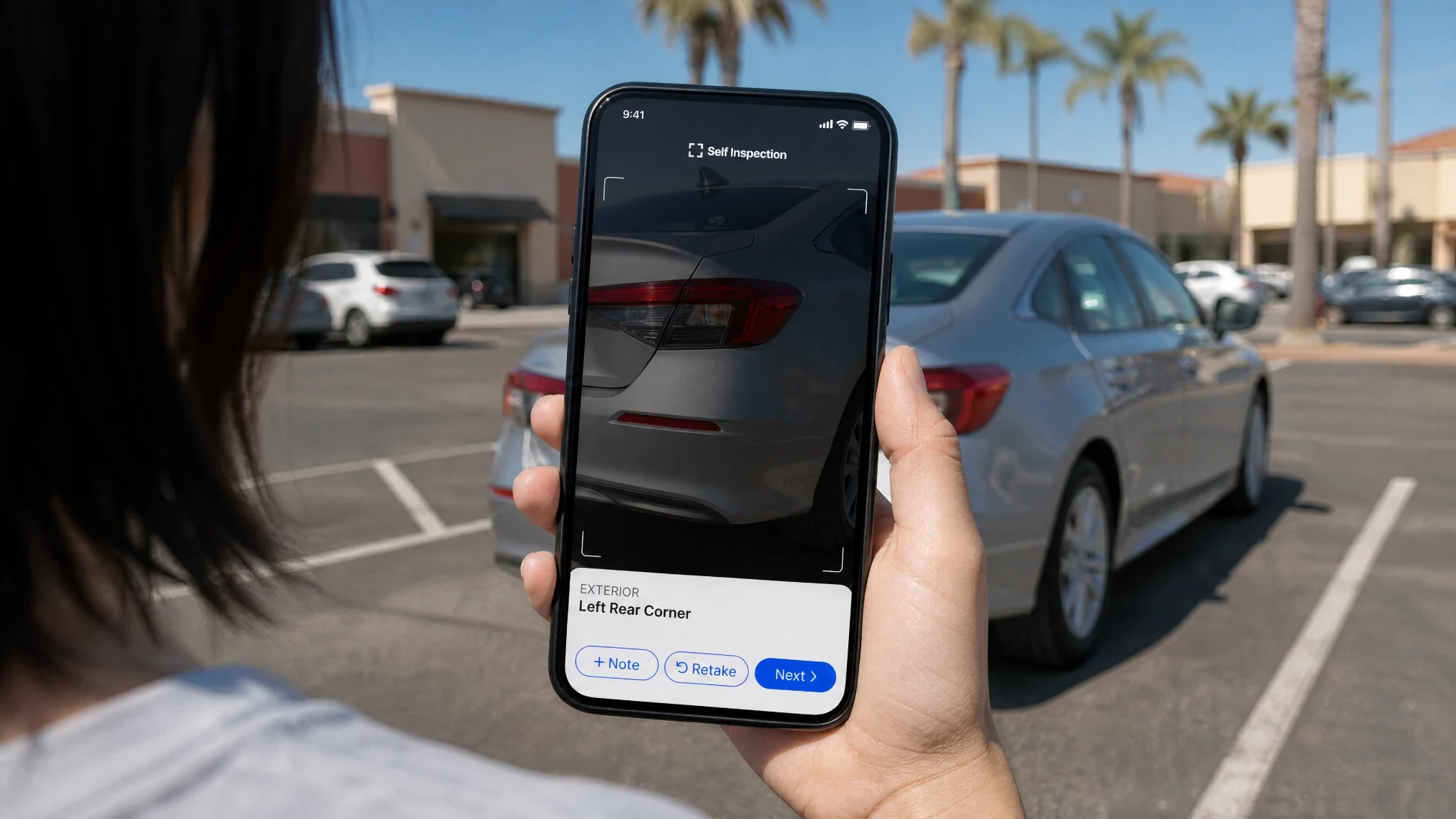
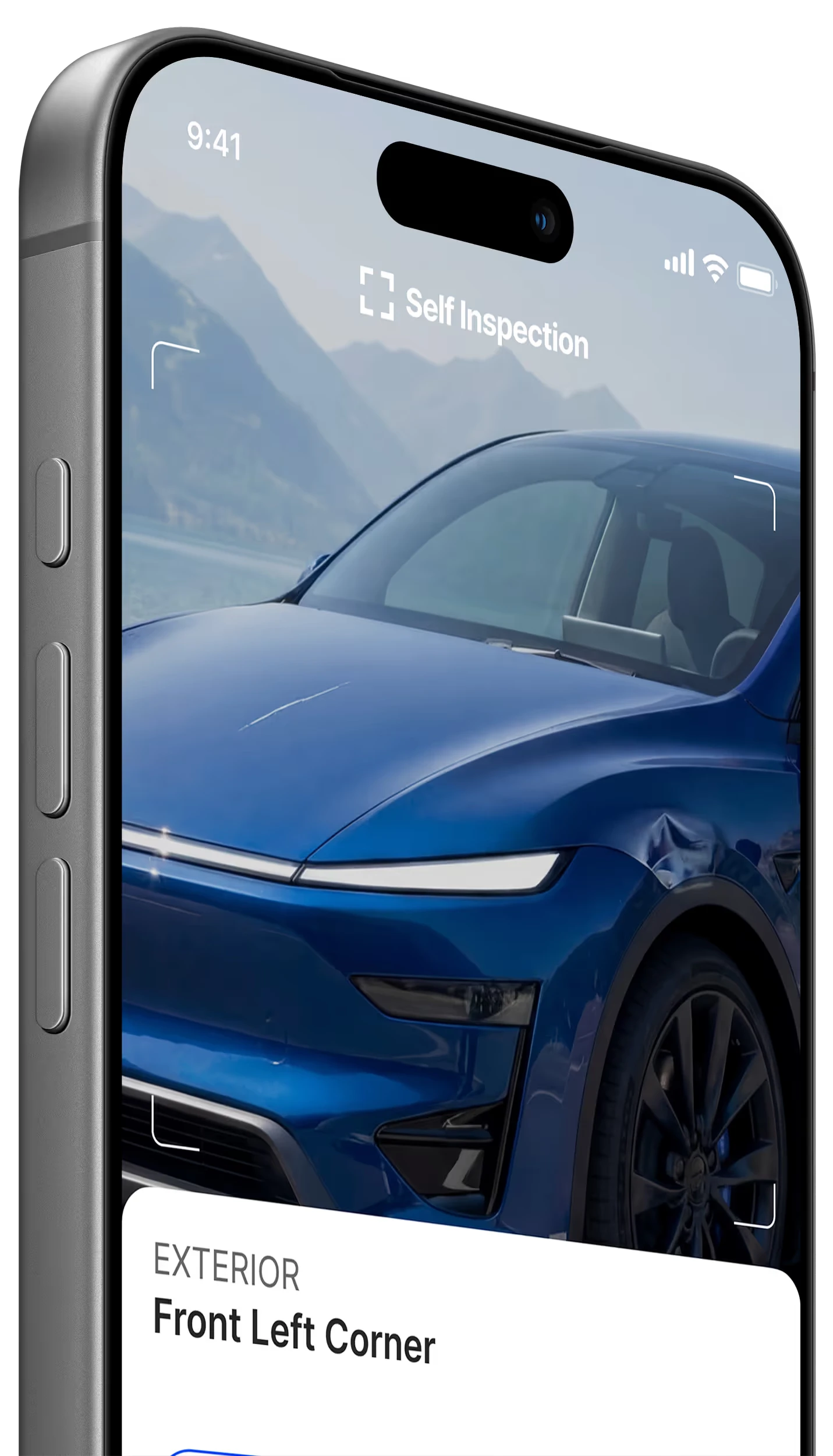
Web-based, no app install. A guided sequence walks the user through 8–12 angles depending on vehicle type, with glare and blur detection rejecting unusable photos at the point of capture rather than at review.
What Self Inspection does differently
Six decisions that separate this platform from the rest of the category. Each one has a deep-dive page behind it.
Mobile-first, no app required
Inspection runs in the phone browser. There is nothing to download, no account to create, and no App Store review cycle between a change and the people using it. That matters because the person best placed to photograph a vehicle is often a one-time user - a lease customer, a transport driver, a renter at a return line - and a one-time user will not install software. A link sent by SMS, email, or QR code reaches them in seconds and works identically on iOS and Android.

AI + expert review, not pure AI
Every inspection passes through both the detection model and a certified human reviewer before the report is released. The model does the volume work in under 30 seconds; the reviewer resolves the ambiguous cases that produce disputes - faint scratches, edge-on dents, lighting artifacts - in under 60 seconds. AI alone measures 96% accuracy across the full damage set. With the review layer, delivered accuracy is 99%.

A transport carrier and a dealer need different evidence from the same vehicle. Elsewhere that is a services engagement; here it is a settings screen an operations manager configures in about 15 minutes.


Capture features
Everything that happens on the phone, before a single photo reaches the model. Capture quality sets the ceiling on everything downstream, which is why most of this group exists.








Guided photo capture
On-screen guidance tells the user where to stand, how to angle the shot, and when to move to the next one. It is what makes usable capture possible from someone who has never inspected a vehicle - a lease customer, a renter, a transport driver.

Branded white-label flow
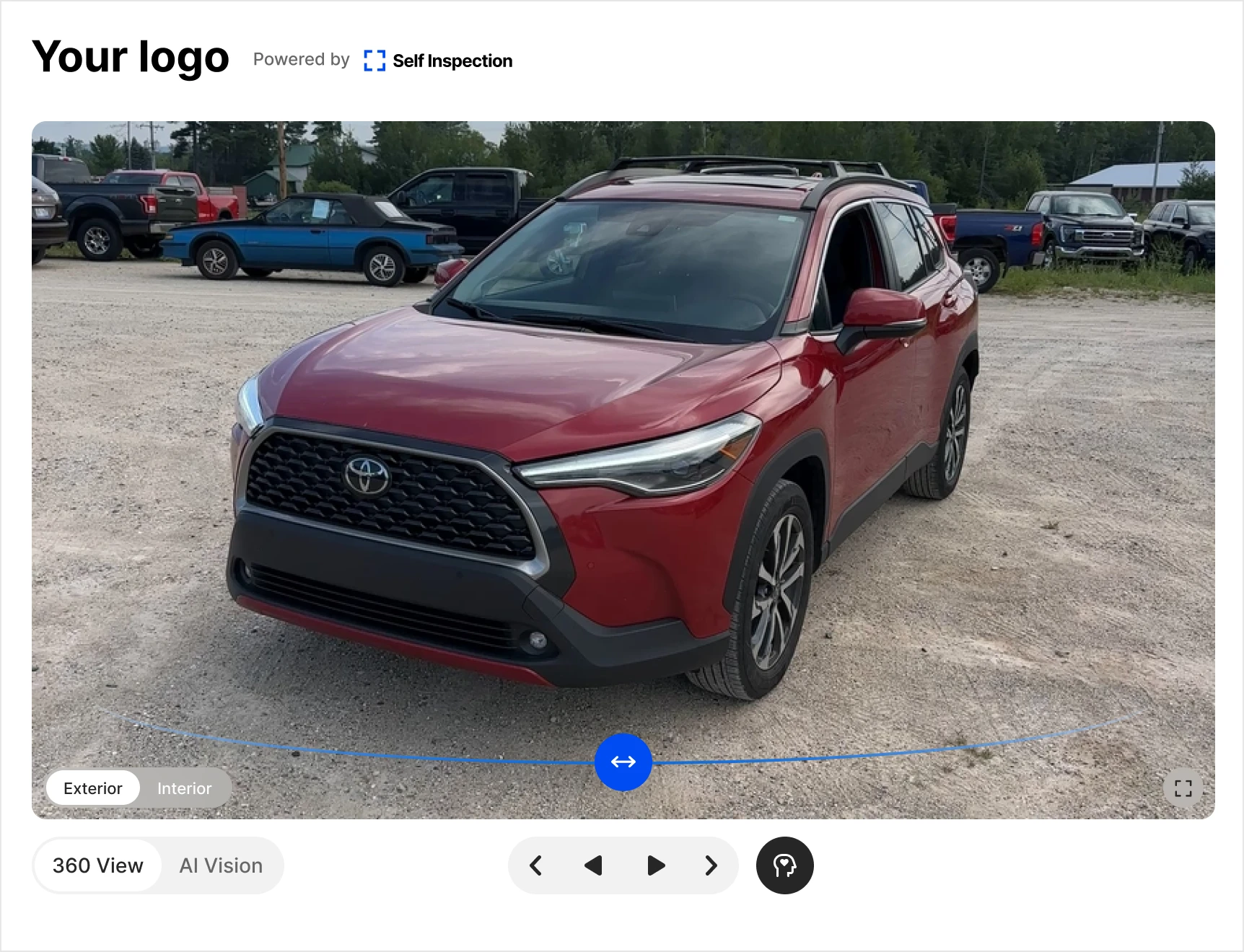
The landing page, capture interface, and report PDF carry your logo, colors, and a custom domain such as inspect.yourbrand.com. The capture user sees your brand throughout. Included in the Enterprise plan.
AI detection features
What the model finds, and how precisely it describes it. The full methodology behind these numbers is documented on the AI accuracy page.
Damage type classification
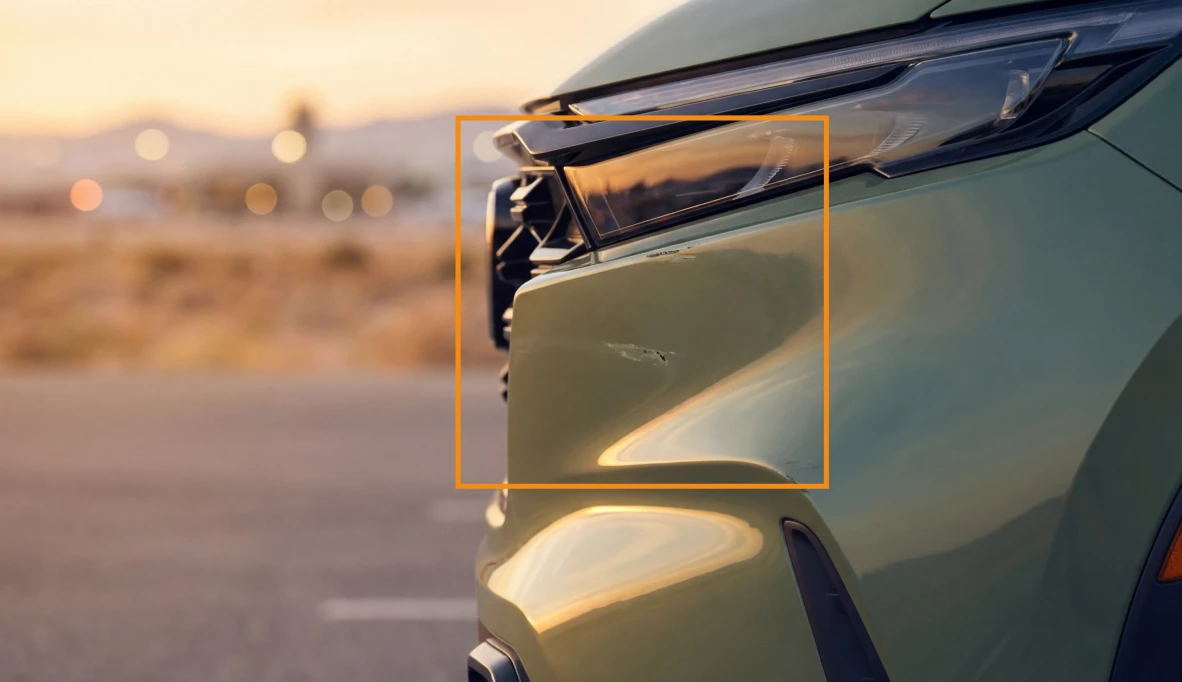
Dents, scratches, paint chips, panel damage, tears, rust, and missing components, each returned with a bounding box on the source photo. AI alone measures 96% accuracy across the full damage set.


Location and severity grading
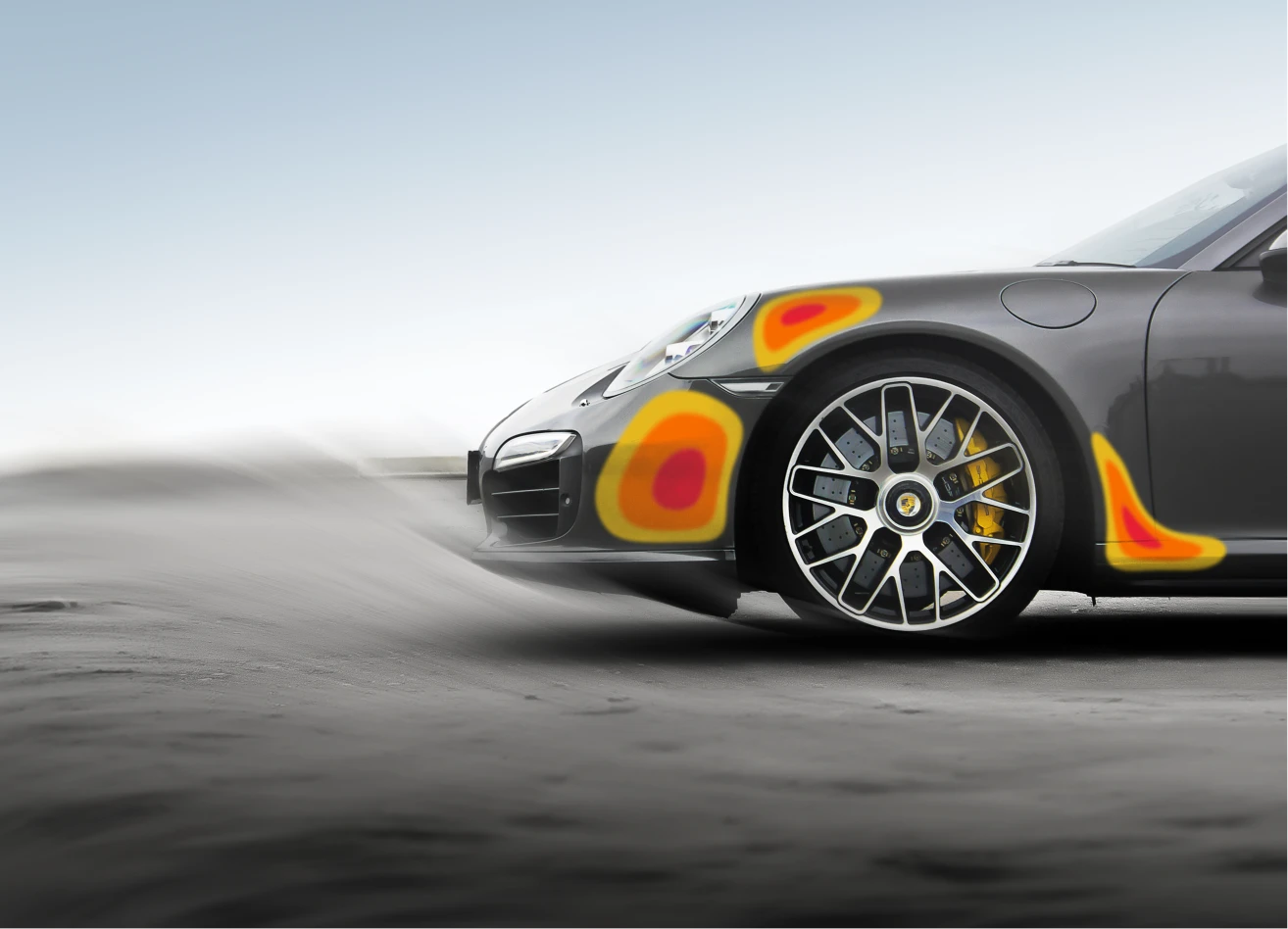
Every finding is placed on a vehicle map and graded 1–5, where 1 is barely visible and 5 means panel replacement. Severity is what drives cost estimates and the CR Score, so it is graded per instance rather than per panel.
AI damage estimation
Every detected finding gets a repair cost estimate the moment it is graded, priced from regional repair data or your own configured rates. Parts, labor, and supplies are separated, so an appraiser can adjust one without rebuilding the rest.


Tire and tread depth analysis
Tread depth measured in 32nds of an inch, plus wear pattern detection that distinguishes normal wear from alignment and inflation problems. Available as part of a full inspection or as a standalone tire-only flow.
Expert review features
The layer that separates this platform from pure-AI alternatives.

Human-in-the-loop verification
Every flagged finding is reviewed by a certified inspector who confirms or rejects each finding before the report is released. Average review time is under 60 seconds per inspection.
Reporting features
What actually gets delivered, in the two formats that matter: one a person reads, one a system ingests.
Standardized condition report
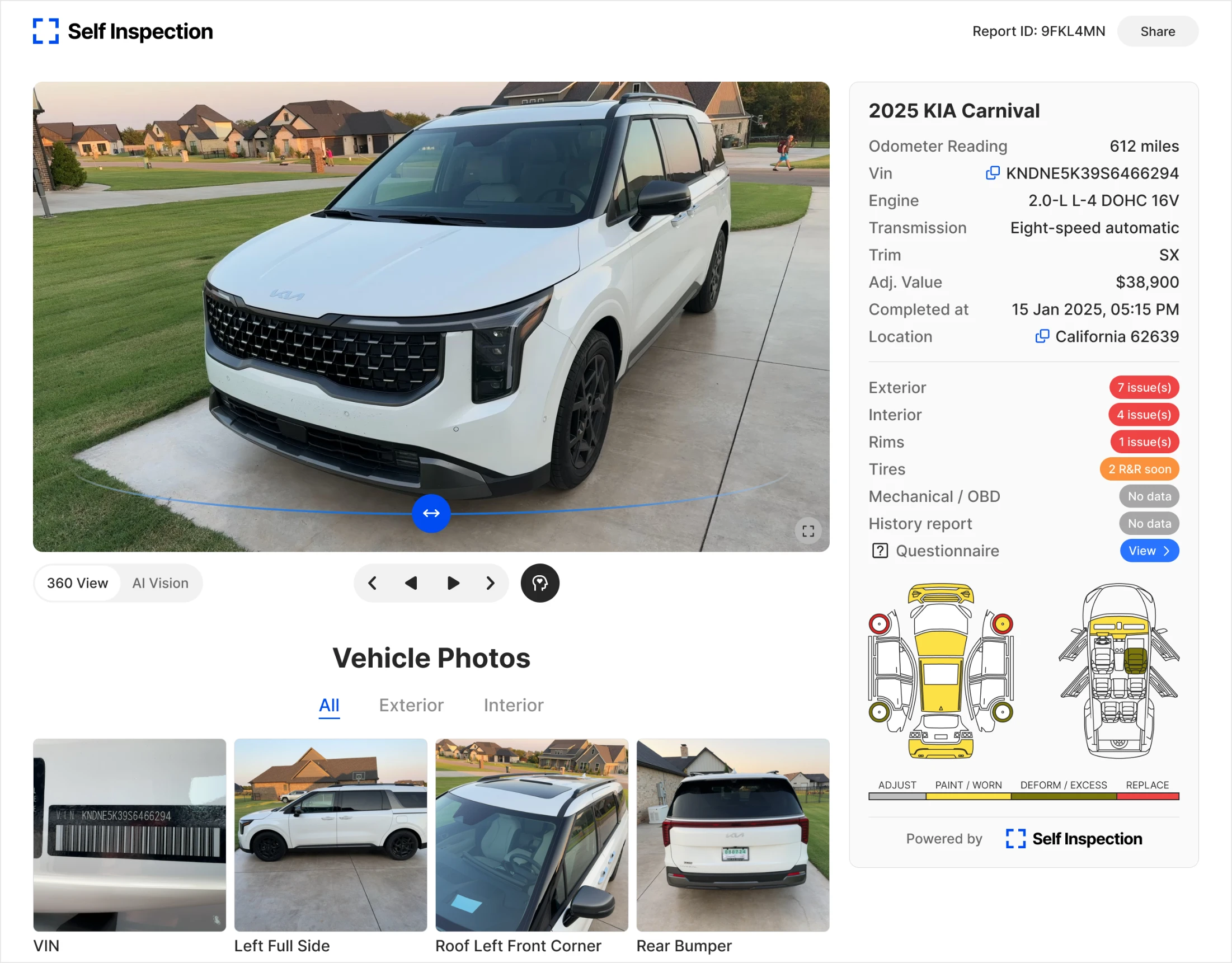
One document carrying the damage list, the evidence photo behind each finding, severity ratings, per-damage cost estimates, the total damage value, and the CR Score. The same structure on every inspection, at every site.
Workflow features
Configuration handled by an operations manager instead of an engineering ticket. All of it lives in the Flow Constructor.

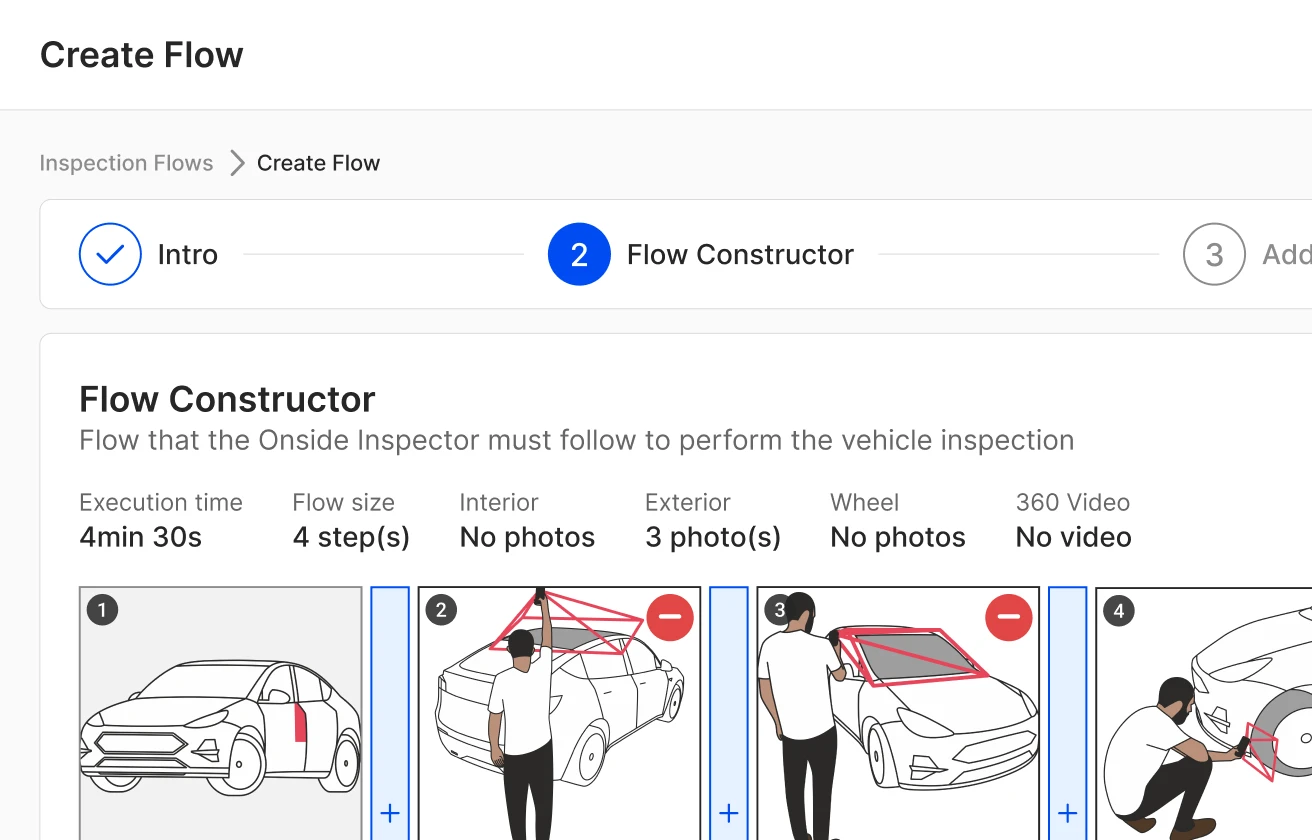
Configurable inspection flows
The Flow Constructor is a no-code builder for required photos, tracked damage types, severity thresholds, and custom fields. Included in the Enterprise plan.

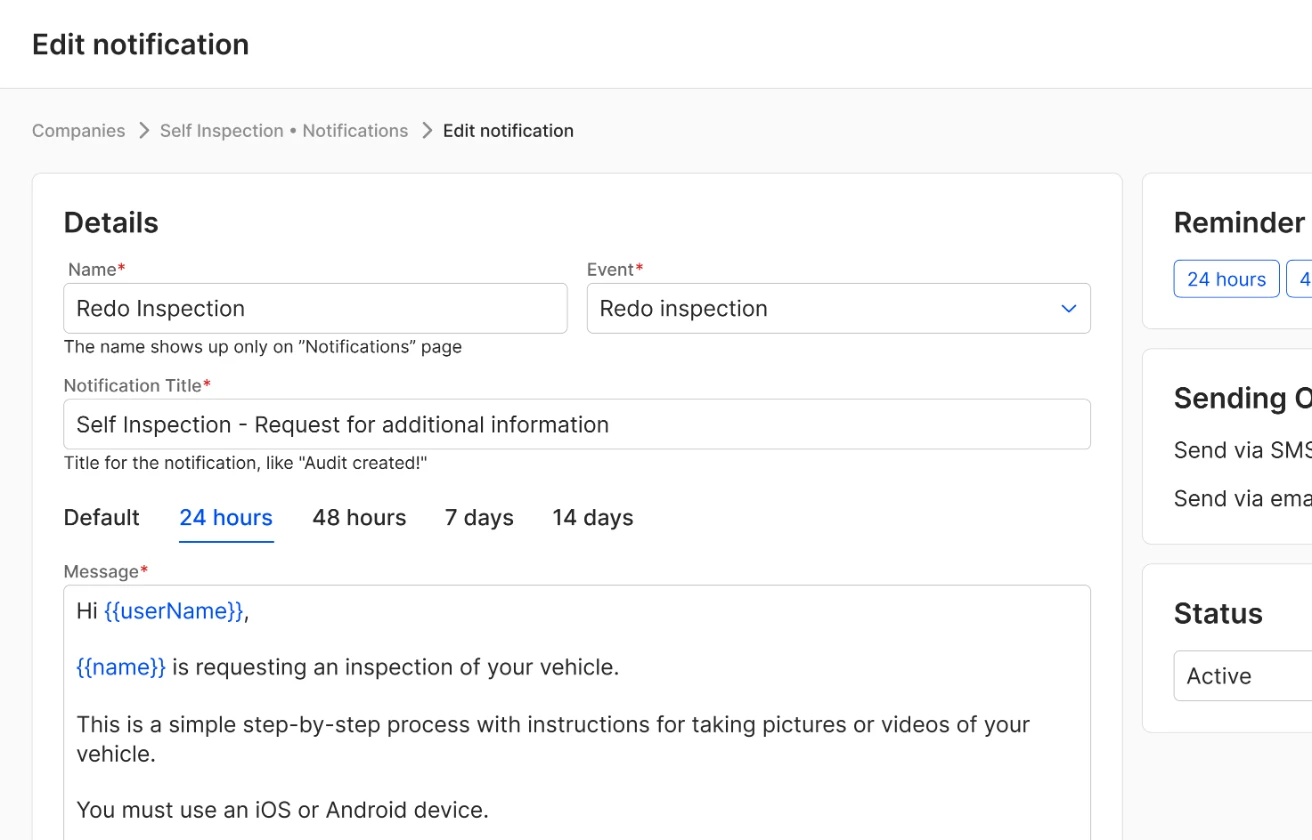
Alerts and notifications
Real-time alerts on the events that need a person: an inspection completed, a damage threshold crossed, an approval waiting. Each trigger is configured per event and routed to the role that acts on it.
Admin and security features
The group that IT and procurement read first. Deployment-side detail is on deployment options.

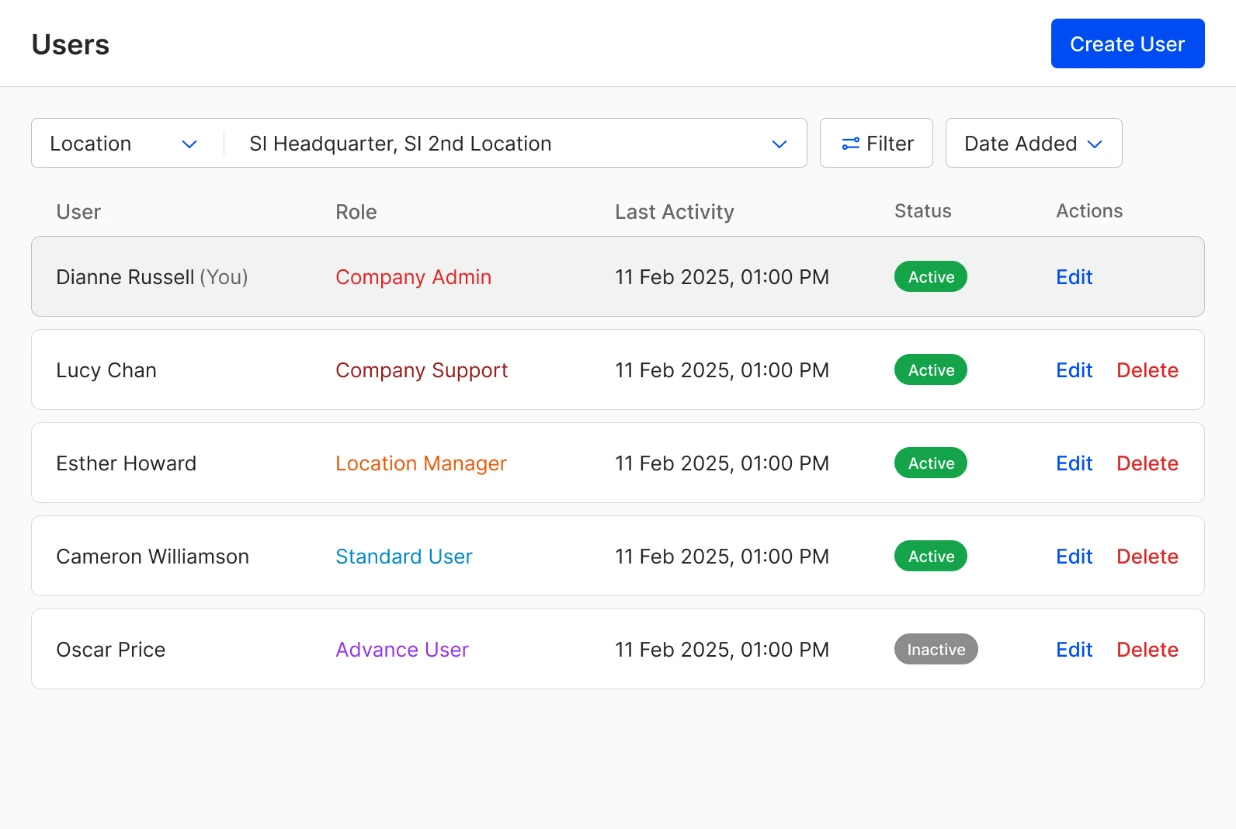
Role-based access control
Granular permissions per role - admin, manager, inspector, viewer - on every plan. Custom roles are configurable on Enterprise.
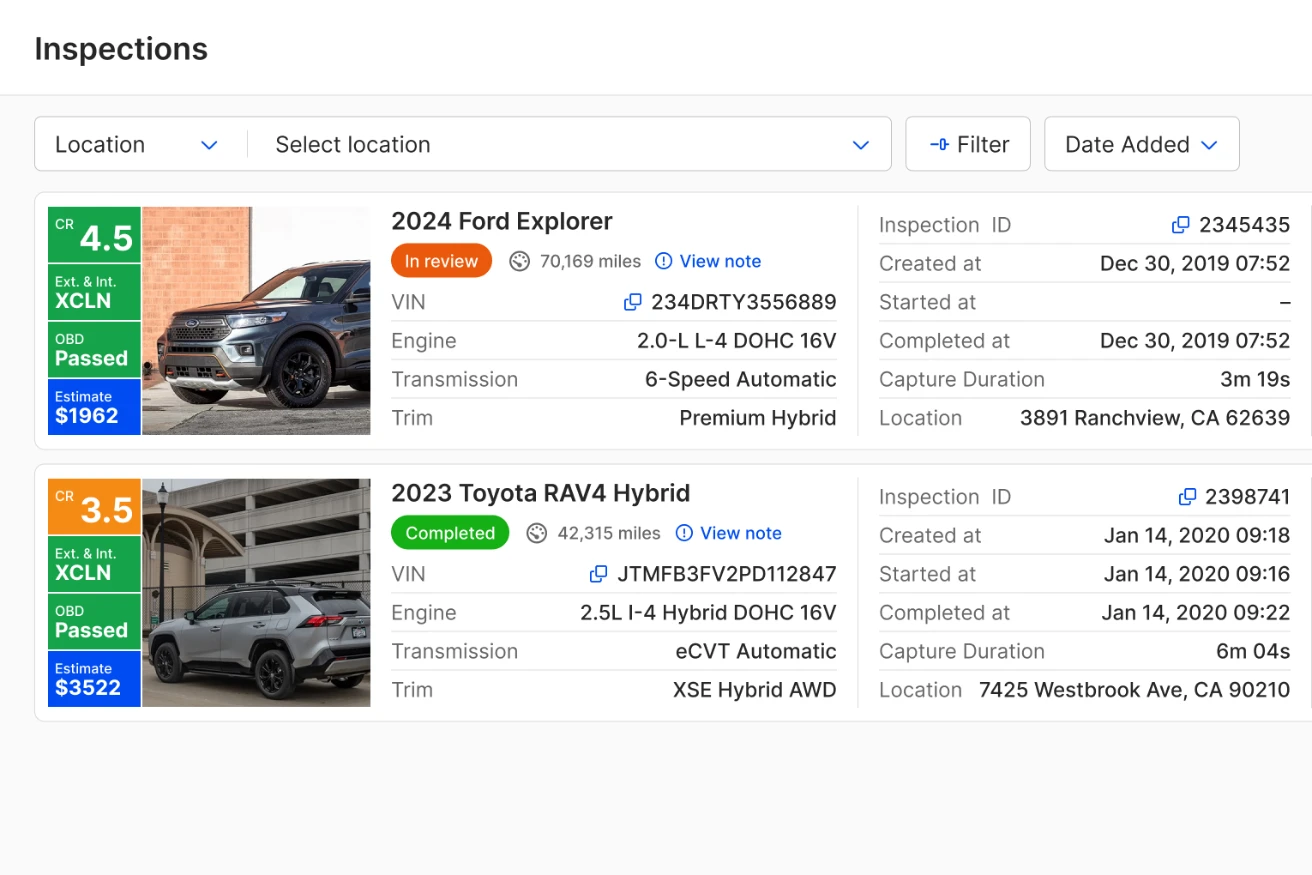
Vehicle and branch management
Every vehicle and every location in one view, with the condition and inspection status of each. A regional manager sees which branch is behind on returns without asking for a spreadsheet.
Built for inspections at scale
The platform has completed more than 1 million inspections. The questions procurement asks at that volume are different from the questions a pilot asks, so here are the answers up front.
Thousands of concurrent inspections. Capture is distributed across your users' own phones, so the constraint is cloud inference capacity rather than inspection bays or staff.
99.9% availability SLA on Enterprise plans, with a public status page for incident communication.
SOC 2 aligned, GDPR and CCPA compliant. Detailed documentation is available under NDA.
See the platform in action - 20-minute demo on your real vehicles
Bring a vehicle from your own lot. We will inspect it live and quote against your actual volume.
FAQ
Vehicle inspection software is a digital platform that automates the process of capturing, analyzing, and reporting on vehicle condition. Modern systems like Self Inspection use AI to detect damage from photos and produce standardized condition reports with severity ratings and cost estimates - replacing manual paper-based or spreadsheet-based inspections.
Self Inspection runs in the mobile browser by default (no app required), combines AI detection with mandatory human expert review, and supports configurable inspection workflows out of the box. Most platforms offer one or two of those; this one ships all three.
Self Inspection's AI alone measures 96% accuracy across the full damage set; with mandatory certified expert review on every inspection, delivered accuracy is 99%. Accuracy is validated against expert-labeled ground truth.
Yes. Self Inspection is browser-based and runs on any modern smartphone or tablet. There are no fixed cameras, no inspection bays, no sensors, and no proprietary hardware. The AI runs in the cloud; the capture happens on whatever phone is closest to the vehicle.
Cars, light trucks, SUVs, vans, and commercial vehicles up to Class 8 trucks are supported. The platform's damage detection model is trained across the full range of common automotive types. Specialty vehicles (motorcycles, marine, off-road) are not currently supported.
Exterior body damage (dents, scratches, paint chips, panel misalignment), glass damage (cracks, chips), tire condition (tread depth, wear patterns), interior wear, and missing or damaged components. The model handles 6,000+ combinations of damage type, location, and severity.
All plans include guided capture, AI damage detection, expert review, the standard condition report, the CR Score, the API, webhooks, and standard integrations. White-label, custom workflows, custom report templates, dedicated CSM, and SLA are included only on Enterprise plans.
Yes. The Flow Constructor is a no-code workflow builder that lets you define which photos are required, which damage types are tracked, what severity thresholds flag an issue, and which stakeholders need to approve the report. Custom workflows are available on Enterprise plans.
Pre-built connectors are available for major DMS platforms (Reynolds and Reynolds, CDK, others), fleet management platforms (Geotab, Samsara), telematics, and CRM systems (Salesforce, HubSpot). Custom integrations are available via REST API and webhooks.
Yes. The capture interface and reports support English, Spanish, French, and German out of the box. Additional languages are available on request for Enterprise customers.
Yes. Self Inspection is SOC 2 aligned, GDPR and CCPA compliant, and supports US and EU data residency. Detailed compliance reports are available under NDA for Enterprise prospects.