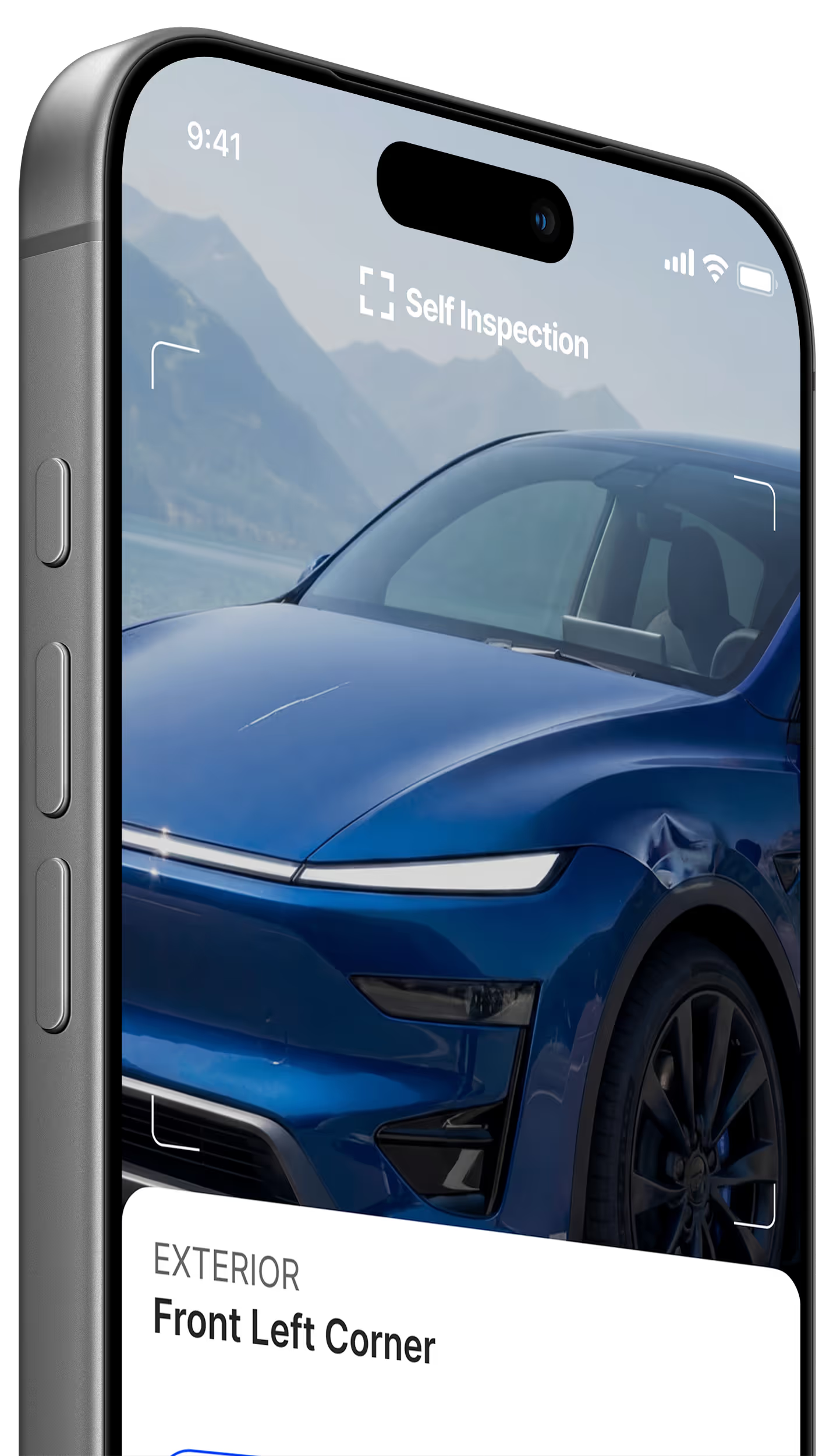
AI-powered vehicle inspection automation: slashing costs and boosting efficiency

Traditional inspections are slow, inconsistent, and expensive - taking days or weeks and suffering from human error and bias. An AI-powered vehicle inspection system replaces manual friction with guided capture, automated damage detection, intelligent repair cost estimation, and expert validation - delivering a trusted condition report in minutes.
Why are AI vehicle inspections a big deal?
Manual, on-site inspections strain teams and margins with scheduling delays, variable quality, and high labor costs that limit throughput and scalability.
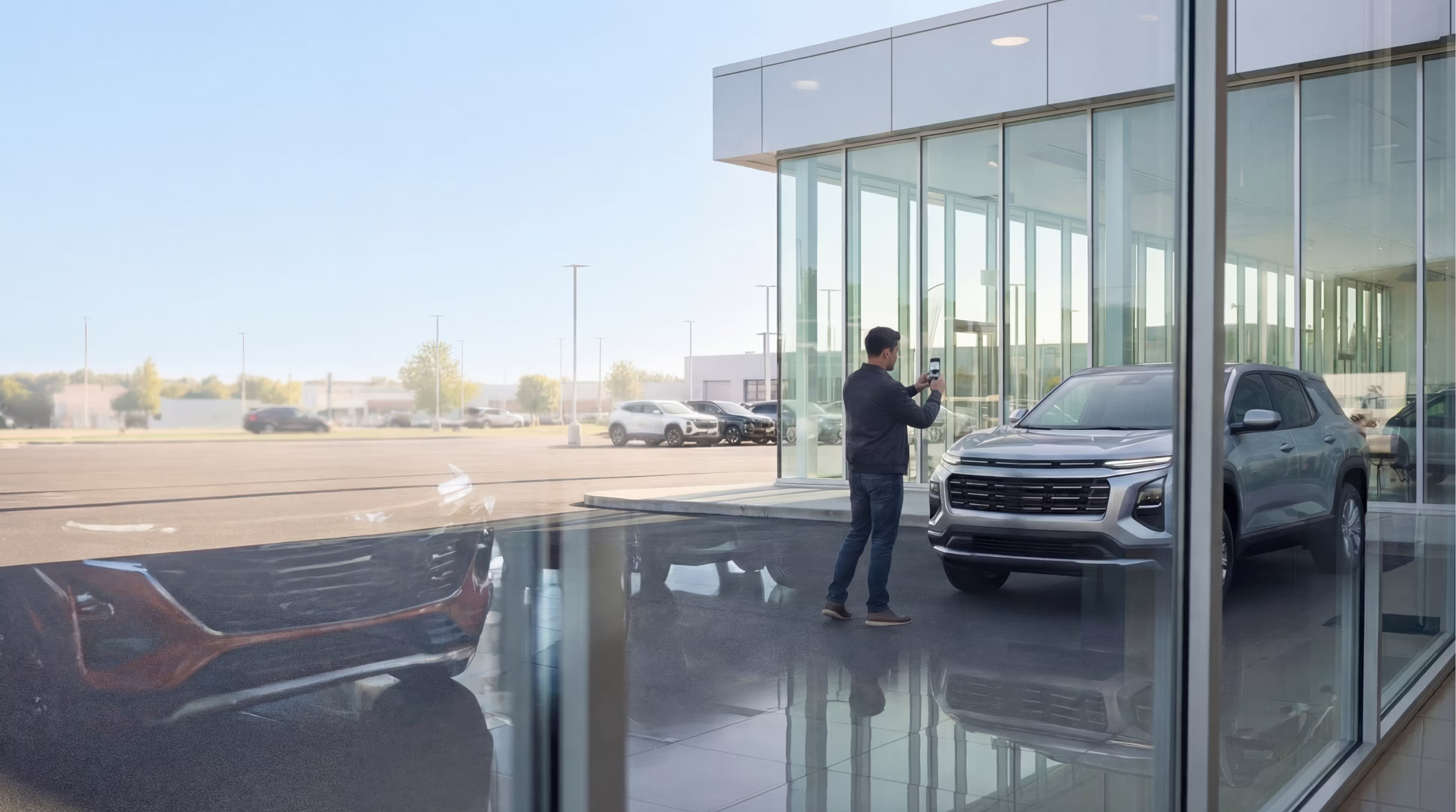
As volumes increase across dealerships, lenders, rentals, fleets, and marketplaces, standardized, digital-first inspections are now essential for consistent valuations and faster decisions. Self Inspection addresses these pain points with contactless, self-guided inspections and validated AI reports, reducing inspection time to just 5 minutes with complete accuracy and transparency.
From manual to automated: how AI reinvents vehicle inspections
Self Inspection is the industry leader in AI-powered vehicle inspection software. Our AI-powered inspections guide anyone with a smartphone through a structured photo and video workflow - exterior, interior, and tires then analyze images to detect and classify damage, severity, and affected parts. The platform compiles a complete condition report with a CR score, repair estimates, so teams can act quickly with standardized evidence.
Self Inspection’s AI-powered condition reports: what businesses actually receive
- A consolidated, cross-platform condition report (CR) that includes exterior, interior, and tire findings with mapped damages and severities.
- An accurate CR score for instant vehicle health insights and apples-to-apples comparisons across locations and teams.

The cost & efficiency advantage of our AI-powered vehicle inspections
1. Cutting labor costs by up to 70%
By eliminating the need for in-person inspectors, companies can save significantly on operational overhead. AI-powered solutions mean fewer staff hours, less travel, and faster decision-making - helping businesses reallocate resources to higher-value tasks.
2. 3–4x faster turnarounds compared to manual inspections
Manual inspections could take days, while AI-driven inspections deliver results in minutes. In fact, Self Inspection’s platform reduces inspection time to just five minutes with 99% accuracy, giving dealerships the ability to resell faster, lenders to approve financing quicker, and rental companies to process returns instantly.
3. Standardized AI reports reduce operational risks and bias
Standardized, data-driven reports eliminate inconsistencies. Every inspection follows the same workflow, removing the risk of subjective evaluations and ensuring scalable, unbiased reporting.
4. A comprehensive platform designed for accuracy and scale
Unlike fragmented tools, Self Inspection delivers the industry’s only all-in-one vehicle inspection platform.
Self Inspection platform combines:
- Visual AI damage detection for exterior and interior accuracy.
- Vehicle damage estimation backed by a global database of 10,000+ car parts.
- A dedicated inspection CRM that enables one-click condition reports.
- Expert human verification, ensuring every report is both AI-precise and human-validated.
Accuracy and reliability: AI vs. human inspections
- Benchmarking AI accuracy against traditional methods: AI detects damage with near-perfect accuracy, analyzing millions of images in seconds - something no human can replicate at scale.
- Eliminating human bias and inconsistency: Manual inspections often suffer from subjectivity - what one inspector deems “minor,” another may call “major.” AI ensures consistent, objective evaluations.
- How expert validation ensures trust in every report: Self Inspection pairs AI technology with expert automotive validation, combining machine precision with human expertise for unmatched reliability.
Real-world use cases of automotive inspection automation
1. Dealerships & auto marketplaces: faster trade-ins and resale decisions
For dealerships and online marketplaces, speed and accuracy in trade-ins are critical. Traditional manual inspections often slow down the appraisal process, creating friction for both sellers and buyers.
With AI-powered vehicle inspections and automated systems, dealerships can instantly appraise trade-ins using precise, standardized condition reports. This reduces turnaround times from days to minutes, allowing dealers to quickly determine resale value, accelerate inventory turnover, and capture more opportunities in a competitive market.
2. Leasing & rental companies: scaling inspections without extra staff
Leasing and rental companies manage thousands of vehicles at any given time, making efficiency and scalability essential. Manual inspections require large teams and are often prone to inconsistency.
By adopting Self Inspection’s platform, fleets can conduct inspections effortlessly without expanding staff, significantly lowering operational costs. The system enables faster vehicle check-ins and check-outs, improving asset management, reducing downtime, and ensuring vehicles return to the road more quickly.
3. Financial institutions: reducing risk in vehicle financing
Banks and auto lenders rely on accurate valuations to manage risk and protect investments. Manual inspections leave room for human bias, underreporting, or missed damages - leading to incorrect loan values or higher exposure to fraud.
With AI-powered vehicle inspection automation, financial institutions gain access to reliable, data-driven condition reports that are standardized across all vehicles. This consistency allows lenders to verify collateral value with confidence, streamline loan approvals, and reduce exposure to fraud or misrepresentation.
4. Consumer benefits: transparency and peace of mind
For individual buyers and sellers, transparency is everything. Too often, disputes arise from overlooked damages or inflated repair estimates during manual inspections.
With AI-powered condition reports, consumers can access a clear, unbiased snapshot of a vehicle’s true condition - including visual damage detection, and repair estimates. This level of transparency ensures fair transactions, builds trust between parties, and provides peace of mind when purchasing or selling a vehicle.
The competitive edge of Self Inspection
- CR Score for instant vehicle health insights: The CR Score delivers a quick snapshot of a vehicle’s condition, helping businesses make faster, smarter decisions.
- Detecting 6,000+ damage types with AI precision: With one of the most advanced car inspection AI models, Self Inspection’s system identifies thousands of damage combinations with unmatched precision.
- Combining AI with human expertise for maximum accuracy: AI does the heavy lifting, while expert reviewers validate results - delivering accuracy, consistency, and scalability.
- Partnerships & proof - westlake financial and industry leaders: Partnerships with Westlake Financial and investment support from Costanoa Ventures and DVX Ventures validate Self Inspection’s credibility and industry leadership.
The future of automotive inspection automation
The future of vehicle inspections is digital, automated, and powered by AI. Key trends include:
- End-to-End Digital Inspections: Fully automated assessments covering exterior, interior, mechanical diagnostics, and predictive maintenance.
- Connected Vehicles & EV Integration: Real-time data from connected and electric vehicles enables proactive issue detection and optimized workflows.
- Faster, More Accurate, Cost-Efficient: AI-driven platforms set new benchmarks for speed, precision, and operational savings across dealerships, fleets, and financial institutions.
- Standardized, Data-Backed Insights: Reliable, consistent reports support smarter decision-making and reduce risk in vehicle transactions.
- Automation Meets Expertise: Combining visual AI, intelligent damage estimation, and predictive analytics ensures trust, transparency, and precision in every inspection.

Conclusion: smarter, faster, more reliable inspections at scale
AI-powered inspection automation shrinks costs, speeds cycle times, and raises accuracy, enabling consistent valuations, improved trust, and better customer experiences. For organizations looking to future-proof inspections, Self Inspection’s AI-powered platform offers configurable workflows, robust analytics, and scalable quality.
Book a demo to see the workflow, CR score, and estimation capabilities in action.
Frequently asked questions
What is Self Inspection AI-powered vehicle inspection and how does it work?
It’s a guided, smartphone-based capture flow analyzed by AI to detect and classify damages, generate a condition report with a CR score and repair estimates - reviewed and validated by automotive experts.
How accurate are AI-powered inspection systems compared to manual methods?
They are significantly more accurate, consistent, and scalable than manual inspections, reducing inspection time to just five minutes with 99% accuracy, while detecting even minor damages often overlooked by humans.
What types of damage can AI detect during inspections?
Self Inspection’s AI can detect even minor damages or dents, including exterior and interior issues such as scratches, scuffs, cracks, bumper and fascia problems, glass and lighting anomalies, wheel and tire wear, sidewall issues, and more—all mapped by severity and affected parts.
Which industries benefit most from AI-powered vehicle inspections?
Dealerships, digital marketplaces, rental and fleet operators, leasing companies, and financial institutions benefit from faster, standardized, AI-enabled inspections and data-backed decisions.
Can AI-powered inspections be used for both new and used vehicles?
Absolutely. AI-powered inspections can be used for both new and used vehicles. For new cars, the technology provides a clear baseline condition report at the point of sale, ensuring accurate records from day one.
For used vehicles, AI inspections offer an unbiased, detailed assessment of wear and tear, damages, and mechanical health, helping dealerships, lenders, and buyers make fair and data-backed decisions. This consistency builds transparency and trust in valuations, regardless of a vehicle’s age or history.
Can I perform a virtual car inspection with AI?
Yes. With Self Inspection’s AI-powered platform, anyone can complete a virtual car inspection using just a smartphone. The system provides an easy step-by-step guide for capturing exterior, interior, and tire photos, which are then analyzed by AI and verified by automotive experts.
This eliminates the need for scheduling in-person appointments or relying on third-party inspectors. Whether you’re a dealership processing trade-ins, a lender reviewing collateral, or a consumer buying or selling a car, virtual inspections make the process faster, more accessible, and more reliable.
What’s the difference between manual and AI-based visual inspections?
Manual inspections rely on human availability and subjective assessment; AI-based visual inspections deliver standardized, automated detection and cost estimates with expert validation for consistency, speed, and scalability.

Ready to get started?
Streamline lease returns, reduce disputes and accelerate remarketing readiness - all from one simple platform.