How AI enhances vehicle repossession inspections: Accurate reports for risk reduction & value recovery

When a vehicle is repossessed, every moment matters - from legal liability to resale value. Traditional methods of repo inspections are slow, inconsistent, and often expensive. Self Inspection’s AI-powered vehicle repossession inspection revolutionizes the process, delivering contactless, scalable, and near-perfect condition reports in minutes, complete with a CR score to support smarter, faster decisions.
4 reasons why vehicle repossession inspections matter
Vehicle repossession isn’t just about recovering assets - it’s about managing risk, protecting reputation, and maximizing vehicle recovery value. Each repossession is both an opportunity - but also a liability to businesses that rely on manual processes.
Without accurate documentation, lenders expose themselves to legal disputes, undercut valuations, and experience prolonged resale timelines - stuff that neither vehicle buyers nor sellers like. With the right AI Vehicle inspection tools in place, these risks become minuscule and drive 3x improvement in processing times, boosting customer experience.
1. Protecting against liability and legal disputes
Repossession disputes are among the most common headaches for lenders and recovery agents. A borrower may claim their car was pristine, only to point to dents or scratches discovered later. Without evidence, lenders are often forced into costly settlements or strained customer relationships.
Self Inspection eliminates this uncertainty. Every vehicle inspection is timestamped, tamper-proof, and verifiable, creating an indisputable record of pre-existing conditions. We trained our model on over 10 million images of actual cars to ensure that you get the precision you can trust. In a repossession space, our solution protects lenders and saves time and money for repo companies. We reduce the number of fraudulent claims while ensuring courts, regulators, and customers see transparent, unbiased evidence - all in a perfectly semi-automated fashion with expert reviews of car condition.
2. Ensuring accurate vehicle valuation
Valuation accuracy directly impacts recovery. Overestimating a vehicle’s condition inflates reserve prices and delays sales - leaving customers unhappy. On the other hand, underestimating damages leaks revenues for repossession companies.
We balance out this situation. Our AI-powered condition reports provide a true baseline for resale value for both parties. With automated damage detection, expert validation, and CR scoring, lenders and dealers gain confidence that objective data backs their pricing. This precision ensures faster turnaround at auction and higher trust among buyers.
3. Speeding up resale & recovery
Time is money in the repossession process. Vehicles sitting idle not only depreciate but also accumulate storage costs. Traditional inspections rely on a manual schedule, which can stretch this idle time from days into weeks and even months.
With Self Inspection, condition reports are available in minutes, not days. This speed allows lenders to immediately move vehicles into repair, auction, or resale pipelines. Faster cycles mean higher asset recovery, improved liquidity, and stronger bottom-line performance. Many of our customers report a 3x+ efficiency improvement in operational workflows.
4. Building transparency and trust
Trust is the currency of modern repossession. Dealers want certainty, lenders need defensibility, and customers expect fairness. Traditional inspection methods, with their variability and subjectivity, often undermine this trust.
Self Inspection builds transparency at every step. Reports are digital, standardized, and shareable, making them easy for lenders, recovery agents, and buyers to access. The result is fewer vehicle damage disputes, smoother transactions, and stronger long-term relationships across the repossession ecosystem.
Traditional vehicle repossession inspections (and their limitations)
How repo inspections have been done historically
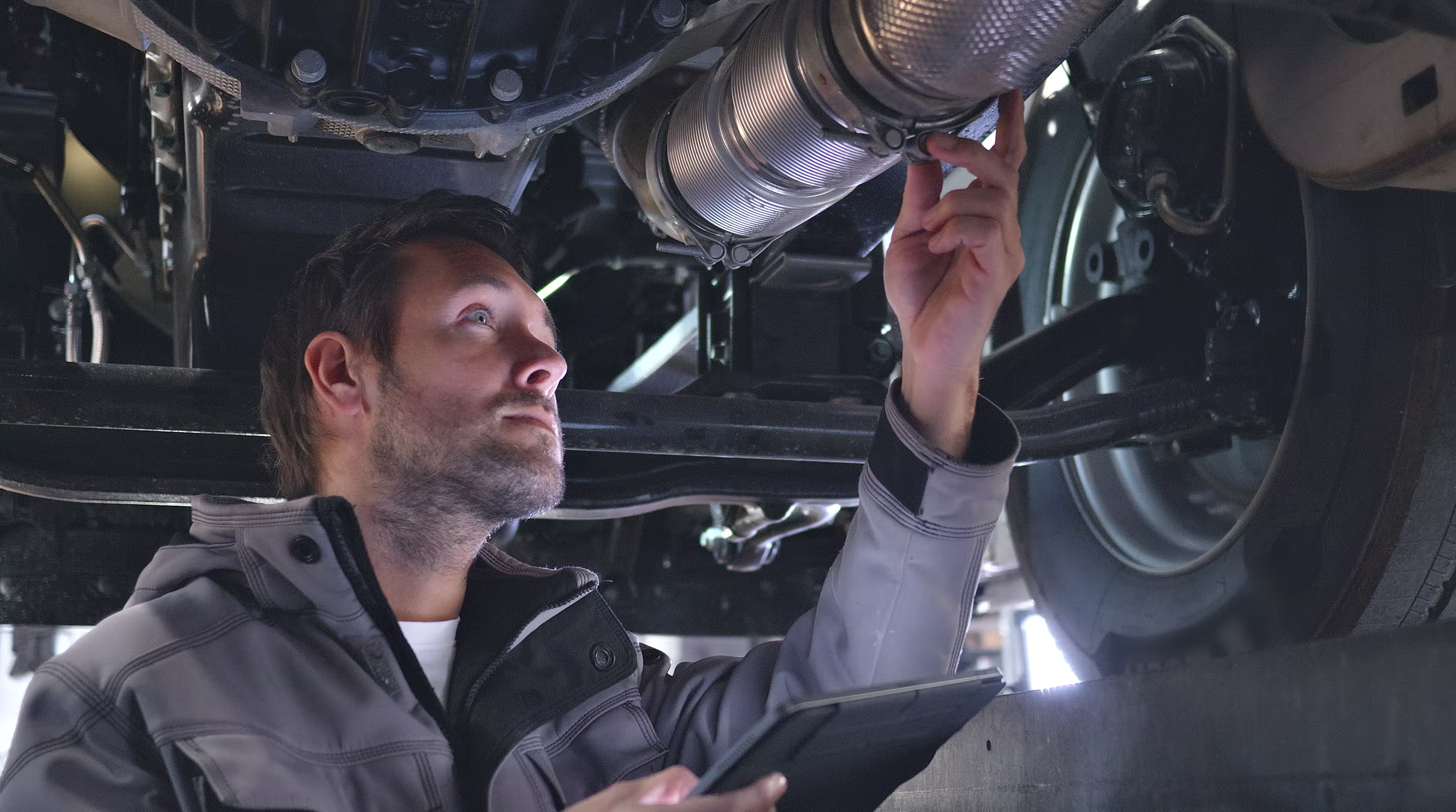
For decades, repossession inspections relied on in-person visits from human inspectors. While functional, this model depended on inspector expertise, scheduling availability, and subjective judgment. No two reports were ever truly identical, leaving stakeholders with an inconsistent foundation for critical financial decisions.
Common challenges:
Legacy inspection models have four recurring problems:
- Delays in scheduling and reporting.
- Inconsistencies in damage detection and documentation.
- High operational costs are tied to labor and travel.
- Limited scalability, especially during surges in repossession volume.
These challenges eroded efficiency and created friction across lenders, repo companies, and dealers, especially in high-volume markets.
The growing need for innovation
With repossession volume surging - 1.73 million vehicles repossessed in 2024, up 16% year-over-year - the cracks in traditional systems are widening. Lenders and repo agents face mounting disputes, longer resale cycles, and escalating costs.
This pressure has made innovation no longer optional, but essential. Self Inspection has emerged as the industry’s answer, providing a scalable, AI-powered alternative that addresses today’s challenges while preparing for tomorrow’s repossession landscape.

How AI is transforming vehicle repossession inspections
1. The core advantages of AI in repossession inspections
Self Inspection’s AI-powered platform shifts repossession from reactive and manual to proactive and data-driven. Key advantages include:
- Contactless inspections: Capture condition at recovery using nothing but a smartphone.
- Rapid turnaround: Reports ready in minutes - for any vehicle, at any location.
- Standardized results: Consistency across vehicles - AI trained by 10 million+ vehicle damage scans.
- Lower costs: Fewer labor-intensive site visits, more than 3x reduction in vehicle inspection times.
- Nationwide scalability: API-driven and customizable - easy integration with your existing workflows.
2. Key features of Self Inspection’s automated vehicle inspection
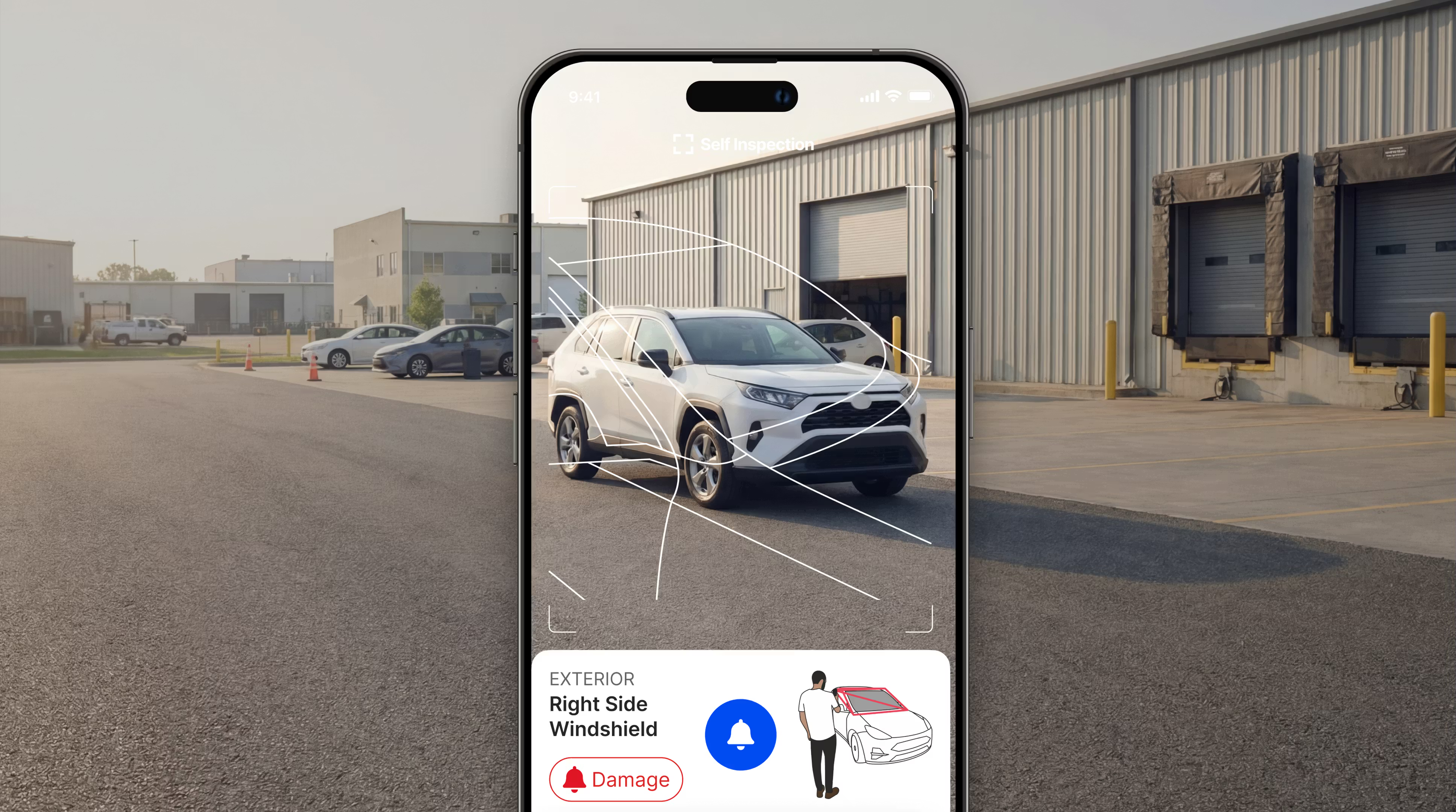
- Snap & Send: A 360-degree, step-by-step video guide that helps you capture vehicle photos and videos. Designed to adapt seamlessly to any lighting or weather conditions.
- AI & Expert Review: AI detects damage, pulls the estimates from the database, and estimates them with 99% accuracy. Our experts validate reports in a fraction of the time.
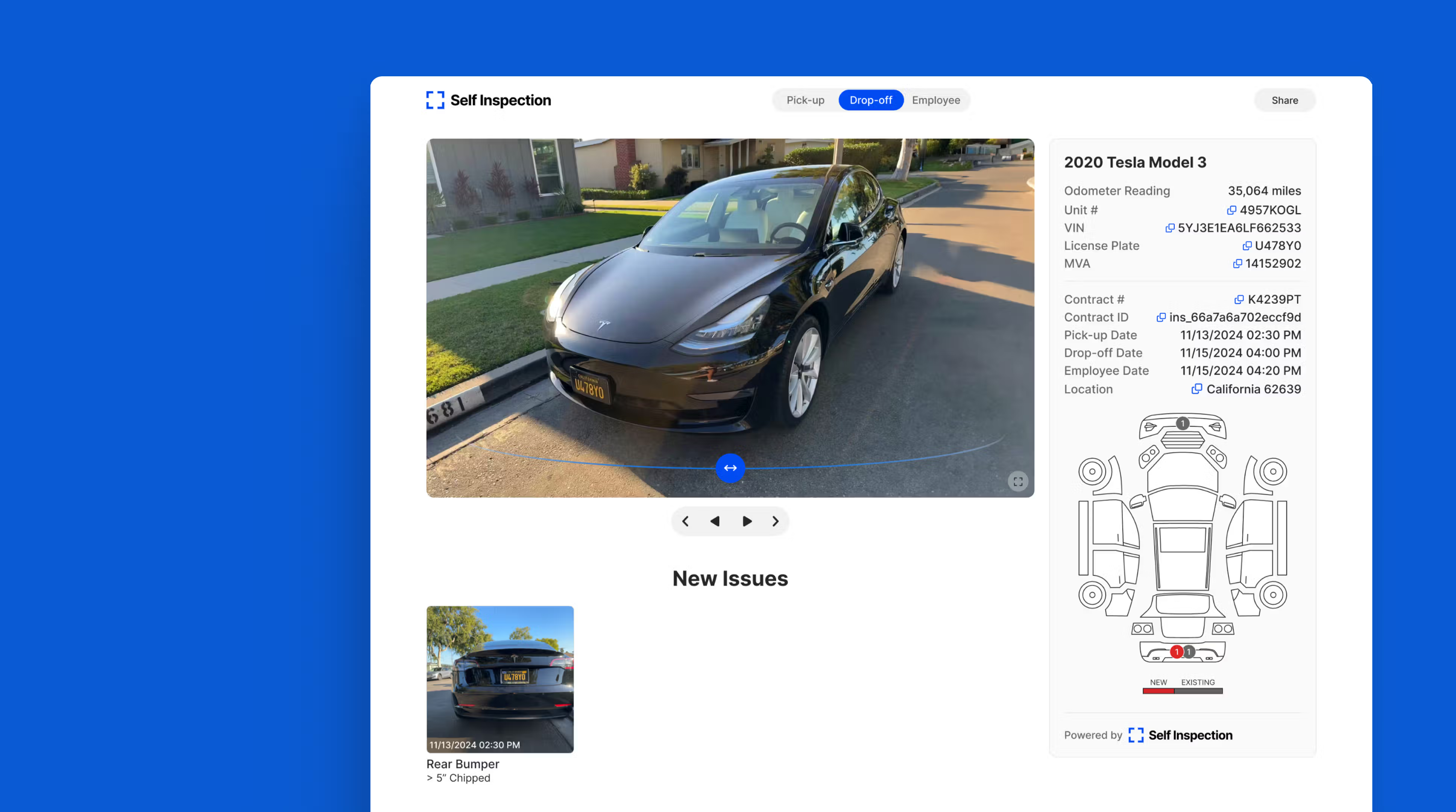
- Comprehensive Condition Report: Includes CR score, repair estimates, tire health, mechanical issues, engine codes, and emissions data.
- Body Inspection: Customizable photo/video workflows, including 360° video.
- Damage Detection: Industry-leading AI damage recognition with expert validation.
- Damage Estimation: Repair cost estimates based on real parts and labor data.
- Mechanical Inspection: AI-powered OBD2 scans detect under-the-hood issues.
3. Self Inspection AI vs. traditional inspections: A side-by-side look
The impact of AI on condition reporting & value recovery
1. Accurate pre-repo documentation
Self Inspection provides tamper-proof, timestamped condition records that eliminate gray areas and protect stakeholders from disputes. What used to be a pain point becomes a defensible asset.
2. Enhanced risk assessment
AI-powered insights help lenders assess repossessed vehicles with greater precision, improving risk models and guiding smarter recovery strategies. It also significantly boosts claim processing times, benefiting both auto businesses and customers.
3. Maximizing vehicle resale value
By pinpointing repair priorities, Self Inspection enables lenders to focus on high-ROI fixes that drive stronger auction results. This approach not only boosts resale readiness but also ensures customers feel confident about their purchases. More consistent and available reporting = more customer trust = more deals and value.
Self Inspection: The AI-powered end-to-end vehicle inspection platform
1. Seamless onboarding
Get started quickly with a platform designed for simplicity. From setup to scaling, Self Inspection makes onboarding effortless, offering full customization and advanced analytics so inspection status is always visible at a glance.
2. Complete inspection control
Take charge with flexible workflows tailored to your needs. Submit instant inspection requests, guide our team through intuitive photos, and receive detailed, expert-validated condition reports - all in one streamlined system.
3. Centralized management
Monitor and manage every inspection from a single, intelligent dashboard. Whether you’re handling a few vehicles or thousands, Self Inspection keeps your operations organized, transparent, and efficient.
Frequently asked questions (FAQs)
1. What is a vehicle repossession inspection, and why is it necessary?
It’s a documented report of a repossessed vehicle’s condition, ensuring fair resale value while protecting lenders and repo companies from disputes. Self Inspection provides this through AI-driven, expert-validated reporting.
2. How do Self Inspection AI-powered repossession inspections work?
Self Inspection makes the process simple and precise. Using a step-by-step mobile guide, repo agents or recovery teams can quickly snap photos of a vehicle’s exterior, interior, and tires.
These images are then analyzed by our AI engine, which detects damage and evaluates condition with exceptional accuracy. Every report is reviewed and validated by automotive experts, ensuring the highest level of precision. Within minutes, you will receive a comprehensive condition report that includes repair estimates, tire health, OBD results, and an overall CR score - all presented in one clear, easy-to-read document that builds confidence and transparency across the repossession process.
3. Can I request a copy of my vehicle’s AI inspection report?
Yes. Self Inspection makes reports easily accessible and downloadable, improving transparency for lenders, recovery agents, and customers.
4. How is vehicle damage assessed using AI during repossession?
The AI engine detects thousands of possible damages, cross-referencing them with extensive parts databases to produce precise, defensible cost estimates.
5. Does Self Inspection AI inspection affect the resale value of my car?
Yes. Self Inspection’s accurate, transparent condition reporting helps prioritize profitable repairs, improve buyer confidence, and support stronger resale pricing.
6. What does a repossession condition report typically include?
Self Inspection reports cover:
- Exterior and interior condition.
- Tire and mechanical checks.
- Detected damages with severity analysis.
- Repair cost estimates.
- A CR score summarizing the overall condition.
This comprehensive, standardized report equips all stakeholders with the clarity needed to act quickly and confidently.
Conclusion
Traditional repossession inspections are strained by escalating volumes, high costs, and inconsistent quality. Self Inspection’s AI-powered platform offers a superior alternative - delivering fast, expertly reviewed, accurate reports with CR scores that drive down liability, accelerate recovery, and restore value. Ready to streamline your vehicle repossession inspections? Schedule a demo with Self Inspection today.

Ready to get started?
Streamline lease returns, reduce disputes and accelerate remarketing readiness - all from one simple platform.