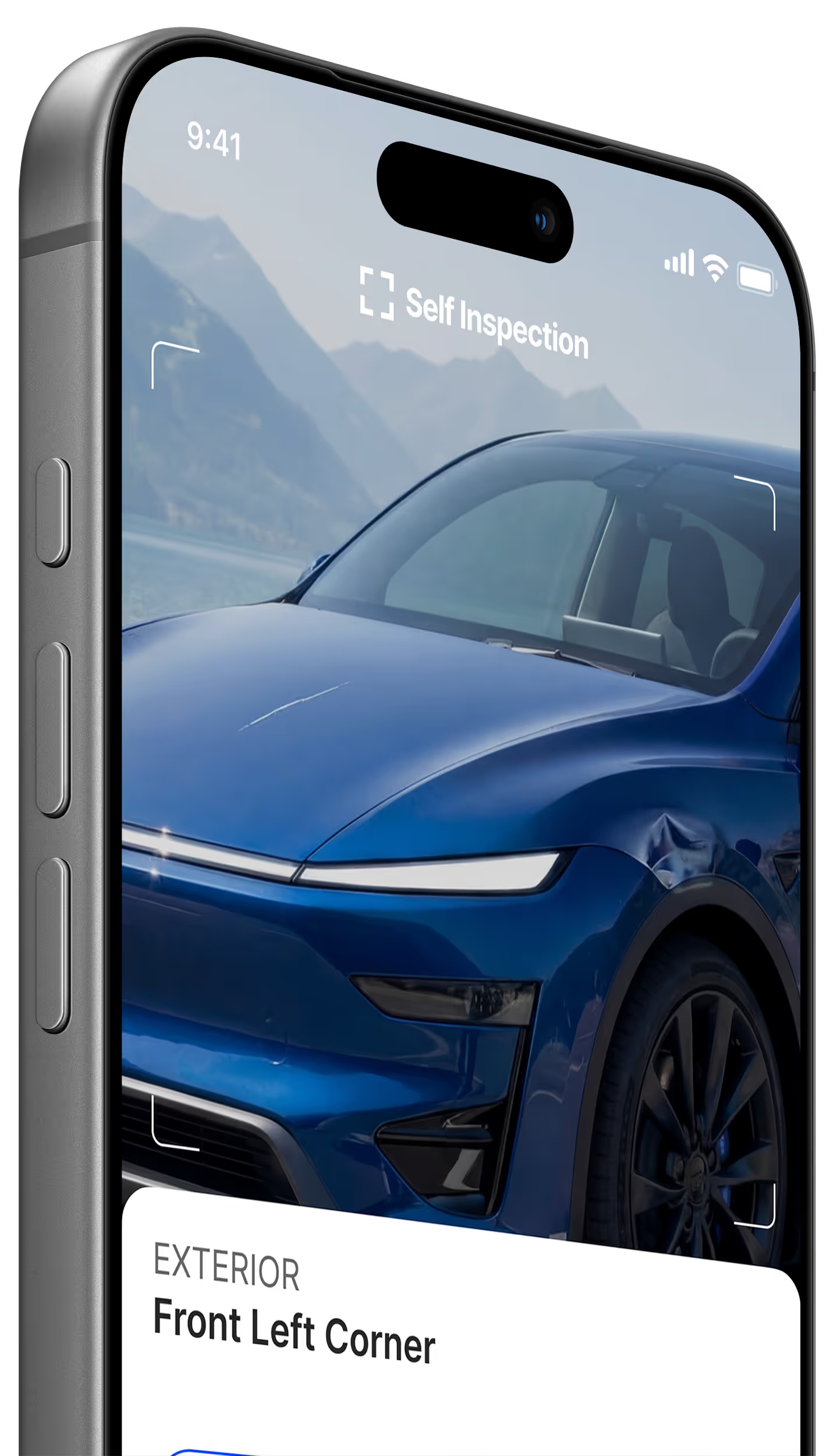
Inside Self Inspection’s AI damage recognition microservice: architecture & performance

Vehicle inspections have always been a pain point for businesses and consumers alike. Traditional processes are slow, inconsistent, and costly - requiring in-person visits and often leading to human error or bias. In today’s automotive ecosystem, where speed and accuracy directly impact trust and profitability - these limitations are no longer acceptable.
This is where AI car damage recognition has changed the game. By combining computer vision, deep learning, and scalable microservices, companies can now complete accurate vehicle assessments in minutes, not days.
At the forefront of this transformation is Self Inspection, the first truly scalable AI-powered vehicle inspection platform. Designed by industry veterans from Apple, Tesla, NVIDIA, and Coinbase, Self Inspection brings data-backed trust and enterprise-grade scalability to a decades-old problem.
In this blog, we’ll take a closer look inside the architecture and performance of Self Inspection’s AI damage recognition microservice - breaking down how it works, why it matters, and how it’s delivering real business value across insurance, lending, fleet management, and consumer markets.
The evolution of AI car damage recognition
AI damage recognition has moved from concept to production in just a few years. Early systems relied on basic image processing, which often failed under poor lighting, unusual angles, or complex damage types. Today, with advances in deep learning and automotive vision intelligence, models can detect dents, scratches, cracks, and even tire wear with remarkable accuracy.
Industries that once depended on manual inspectors - insurance, car rentals, used-car marketplaces, and auto lenders - are now adopting AI-driven damage detection to reduce costs, accelerate claims, and minimize fraud.

How Self Inspection’s damage recognition microservice works?
While other solutions exist, many struggle with scale or lack the microservice-based flexibility required for real-world integration. Nobody likes buying million-dollar equipment in order to scale their operations - this is exactly how Self Inspection stands out from the competition with enterprise-ready deployment.
Step 1 - smart image capture
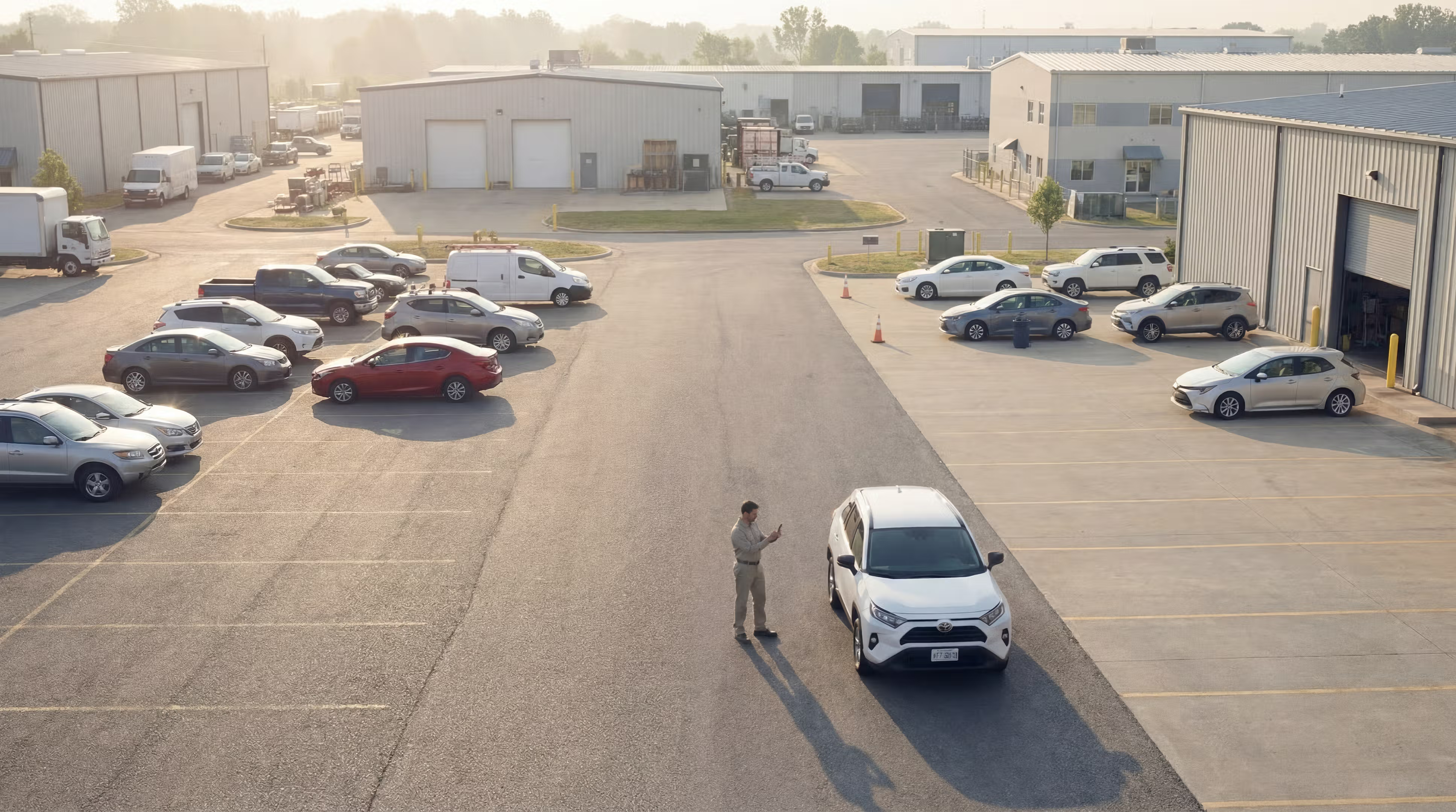
With smartphone-guided workflows, anyone can perform a vehicle inspection in minutes. Whether capturing 360° views or targeted panel images, the platform ensures consistent, high-quality input for the AI engine.
Learn more about our customizable body inspection workflows here.
Step 2 - computer vision & deep learning models
The system is trained on over 10 million images and recognizes 6,000+ unique damage types. Using advanced car panel detection AI, the models identify vehicle components regardless of angle or lighting.
Step 3 - damage localization & severity scoring
Self Inspection’s Condition Report (CR) scoring system goes beyond identifying surface-level issues. It classifies damages by panel, tire, or interior part, assigning severity levels and repair priorities.
- Explore how we provide comprehensive damage estimations and mechanical inspection reports.
Step 4 - AI + expert validation loop
AI alone isn’t enough. That’s why Self Inspection combines automated detection with expert validation, ensuring near-perfect accuracy. This hybrid approach reduces false positives and ensures trust in mission-critical contexts like insurance claims or financial lending.
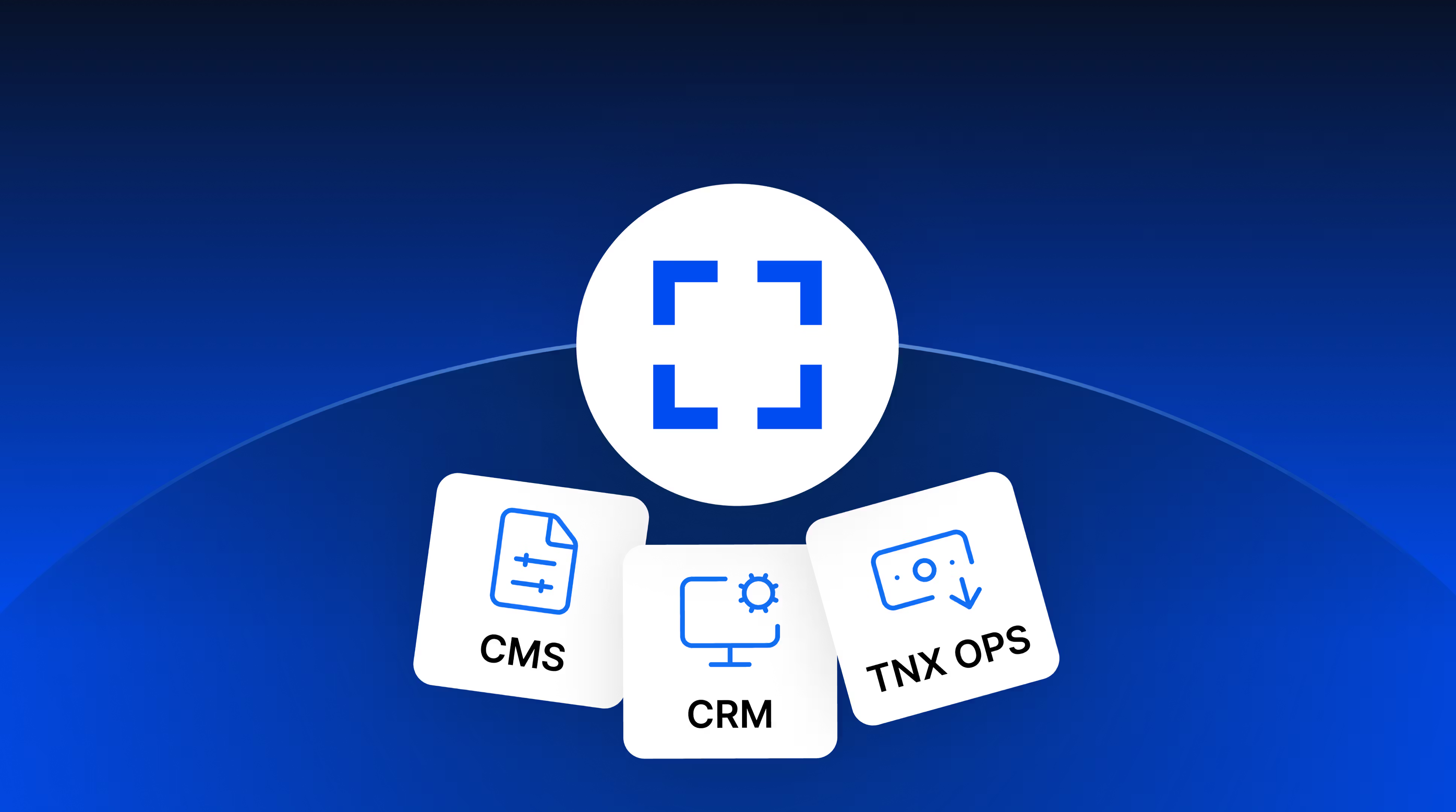
The architecture behind the AI microservice
1. Microservices for scalability
Unlike monolithic inspection systems, Self Inspection uses a microservices architecture. Each service - image capture, panel detection, damage classification, CR scoring - operates independently but integrates seamlessly. This allows auto lenders, insurers, and dealerships to plug into specific features via APIs.
2. Cloud-native deployment
Built for enterprise, the platform supports thousands of simultaneous inspections. Cloud-native infrastructure ensures low latency, so condition reports are generated in near real-time.
3. Vehicle damage detection API
Self Inspection provides a vehicle damage detection API that enables:
- Automated CR score generation
- Panel-level detection
- Damage type classification
- Repair cost estimation
Learn more about our car damage estimation process and intelligent damage estimation solution.
4. Continuous learning & model updates
The AI models aren’t static. They are continuously retrained with new car models, emerging damage types, and real-world inspection data, ensuring performance stays ahead of industry needs.
Performance benchmarks & benefits
1. Accuracy beyond human inspection
Self Inspection consistently delivers unmatched accuracy in panel detection and damage recognition for remote vehicle inspections. Where manual inspections often vary depending on inspector skill, fatigue, or bias, Self Inspection’s AI provides consistent, repeatable, and unbiased evaluations, eliminating disputes & streamlining returns.
This reliability is critical for industries like insurance claims processing and auto financing, where even a small error can lead to a significant financial impact.
2. Speed & cost efficiency
Traditional inspections can stretch over days, requiring appointments, travel, and manual reporting. With Self Inspection, the same process is compressed into minutes. AI-powered condition reports are generated almost instantly, which not only reduces costs but also enables faster decision-making. For insurers, that means quicker claims approval. For auto marketplaces, it means faster listings. For lenders, it means real-time risk assessment.
3. Scalability for B2B and B2C
Self Inspection’s microservice-based platform adapts seamlessly across use cases. Large insurers processing tens of thousands of claims daily can rely on the API to handle scale without bottlenecks.
At the same time, peer-to-peer (P2P) marketplaces and dealerships empower individual customers to conduct their own inspections confidently through a guided app experience. This dual adaptability ensures Self Inspection works for enterprise-grade businesses and consumer-facing services alike.
Automotive challenges & how Self Inspection overcomes them
1. Dealing with image quality & lighting variations
Inconsistent photos are one of the biggest hurdles in vehicle inspections. Shadows, glare, or low-resolution uploads can distort results. Self Inspection solves this with AI-powered preprocessing layers that normalize lighting, sharpen images, and adjust angles before analysis. This means the platform maintains accuracy - even when photos are taken by everyday users in uncontrolled environments.
2. Fraud prevention & trust building
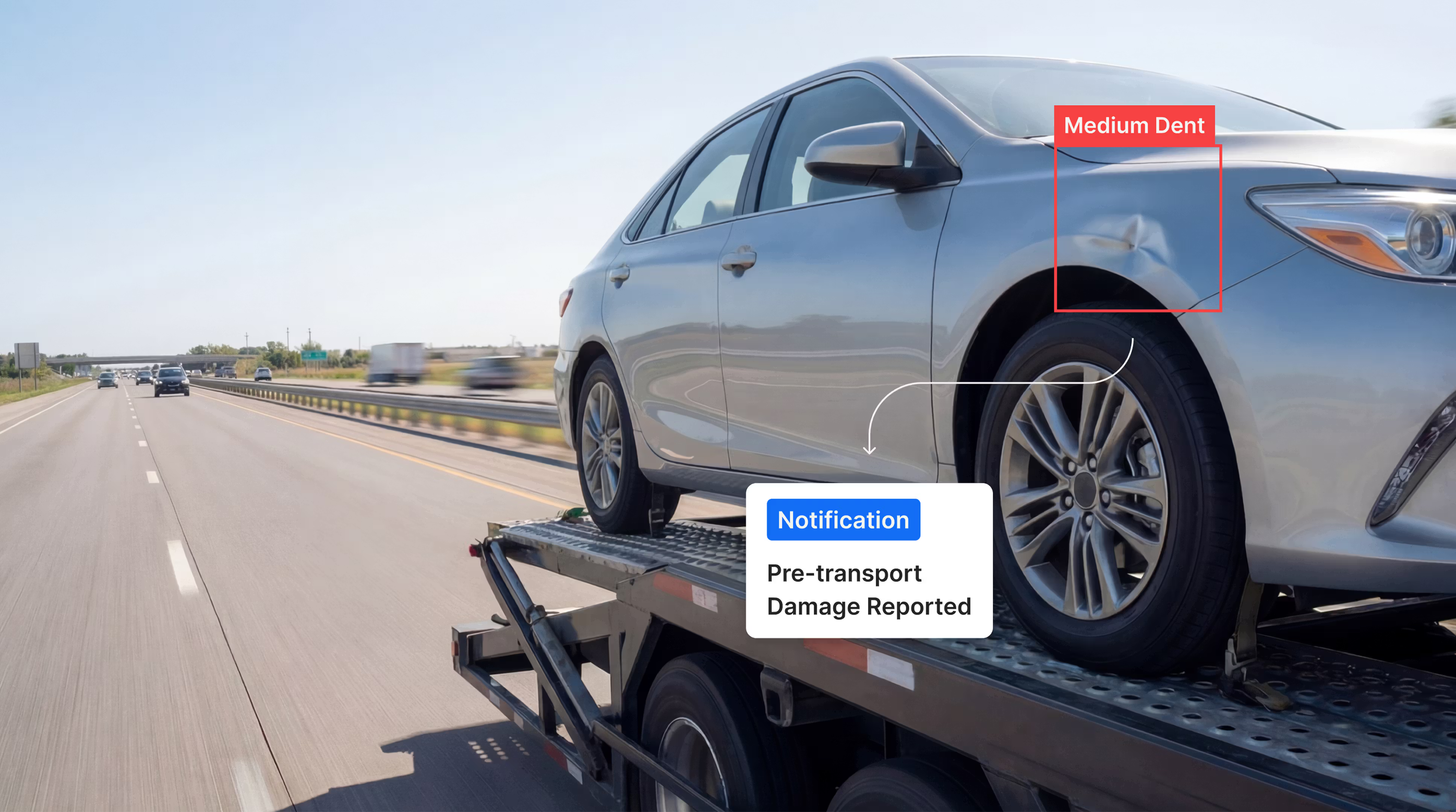
Fraudulent claims or tampered images cost the industry over $40 billion annually. They have long plagued the insurance and automotive industries. Self Inspection tackles this by combining AI detection models with human expert validation.
The result is a tamper-resistant condition report, backed by data trails that make results defensible in both customer disputes and regulatory audits. This dual approach significantly reduces fraud risk while building trust with customers and financial institutions.
3. Handling edge cases
Every year, new car models hit the market, and damage scenarios evolve. Instead of becoming outdated, Self Inspection’s models are continuously retrained with fresh data, covering rare damage types, uncommon angles, and evolving inspection standards. This proactive updating ensures the platform is always ahead of industry challenges, making it reliable for long-term adoption.
What sets Self Inspection apart
- Team Pedigree: Self Inspection was built by experts who previously worked at Apple, Tesla, NVIDIA, and Coinbase - companies known for innovation, AI breakthroughs, and product reliability. This deep expertise ensures the platform isn’t just functional, but also engineered for cutting-edge scalability and precision.
- Strong Backing: The company is supported by Costanoa Ventures and DVX Ventures, alongside partnerships with Westlake Financial. This backing reflects strong market confidence and ensures resources for continuous growth and innovation.
- Proven ROI: Customers using Self Inspection report reduced operational costs, faster claim cycles, and increased inspection accuracy. Whether streamlining insurance workflows or enabling faster dealership turnarounds, the platform delivers tangible business value.
- Comprehensive Solution: Unlike tools that focus only on single-use damage detection, Self Inspection provides an end-to-end inspection ecosystem - covering panel detection, CR scoring, damage estimation, mechanical checks, and expert validation. This makes it a one-stop solution for enterprises and consumers alike.
The future of AI in automotive inspections
The automotive ecosystem is moving toward fully digital inspections - from insurance claims to used-car valuations. Microservices and modern APIs integration will play a central role in enabling businesses to integrate inspection workflows directly into their platforms.
As adoption grows, Self Inspection is leading the way by ensuring accuracy, scalability, and trust. With its AI-driven architecture, the company is setting the benchmark for the next decade of vehicle inspections.
Conclusion
Self Inspection’s AI damage recognition microservice is more than a technical achievement - it’s a business enabler. With microservices architecture, cloud-native deployment, and real-world performance benchmarks, it delivers speed, accuracy, and scalability that traditional inspections can’t match.
As automotive businesses look for ways to modernize and build trust, Self Inspection provides the AI-powered foundation for the future of vehicle inspections. Ready to see it in action? Book a demo today.
FAQs on AI car damage recognition
Can AI accurately identify different types of car damage from photos?
Yes. Self Inspection’s AI leverages deep learning trained on millions of images. It can detect scratches, dents, cracks, tire wear, windshield damage, and interior issues - even when photos are taken under less-than-ideal conditions.
What is CR scoring in AI car damage detection platforms?
CR scoring, short for Condition Report scoring, is a standardized system that translates inspection results into a quantifiable health score. It helps businesses and consumers quickly understand a vehicle’s overall condition and make informed decisions.
How does Self Inspection’s vehicle damage detection API work?
The API integrates directly into business workflows. Once images are uploaded, the system analyzes them to detect damage, classifies the severity, and generates a CR score. It even estimates repair costs, enabling insurers, dealers, and lenders to automate key parts of their process.
What types of damage can AI detect?
From paint scratches, dents, and bumper cracks to tire wear, glass chips, and interior tears, the AI covers a wide range. This breadth ensures a 360° inspection that goes beyond what most manual processes capture.
Why is Self Inspection’s AI more accurate than manual inspections?
Unlike human inspectors, who may overlook small details or interpret damages differently, Self Inspection’s AI delivers objective and repeatable results. Expert validation adds an extra layer of assurance, combining the speed of automation with the judgment of human specialists.
How is AI transforming auto insurance, dealerships, and rentals?
AI reduces fraud in insurance claims, accelerates vehicle onboarding for dealerships, and minimizes disputes in rental returns. By creating consistent and transparent reports, it brings efficiency and trust to every corner of the automotive ecosystem.

Ready to get started?
Streamline lease returns, reduce disputes and accelerate remarketing readiness - all from one simple platform.