Ultimate guide to AI for auto repair: transform your shop with smart technology
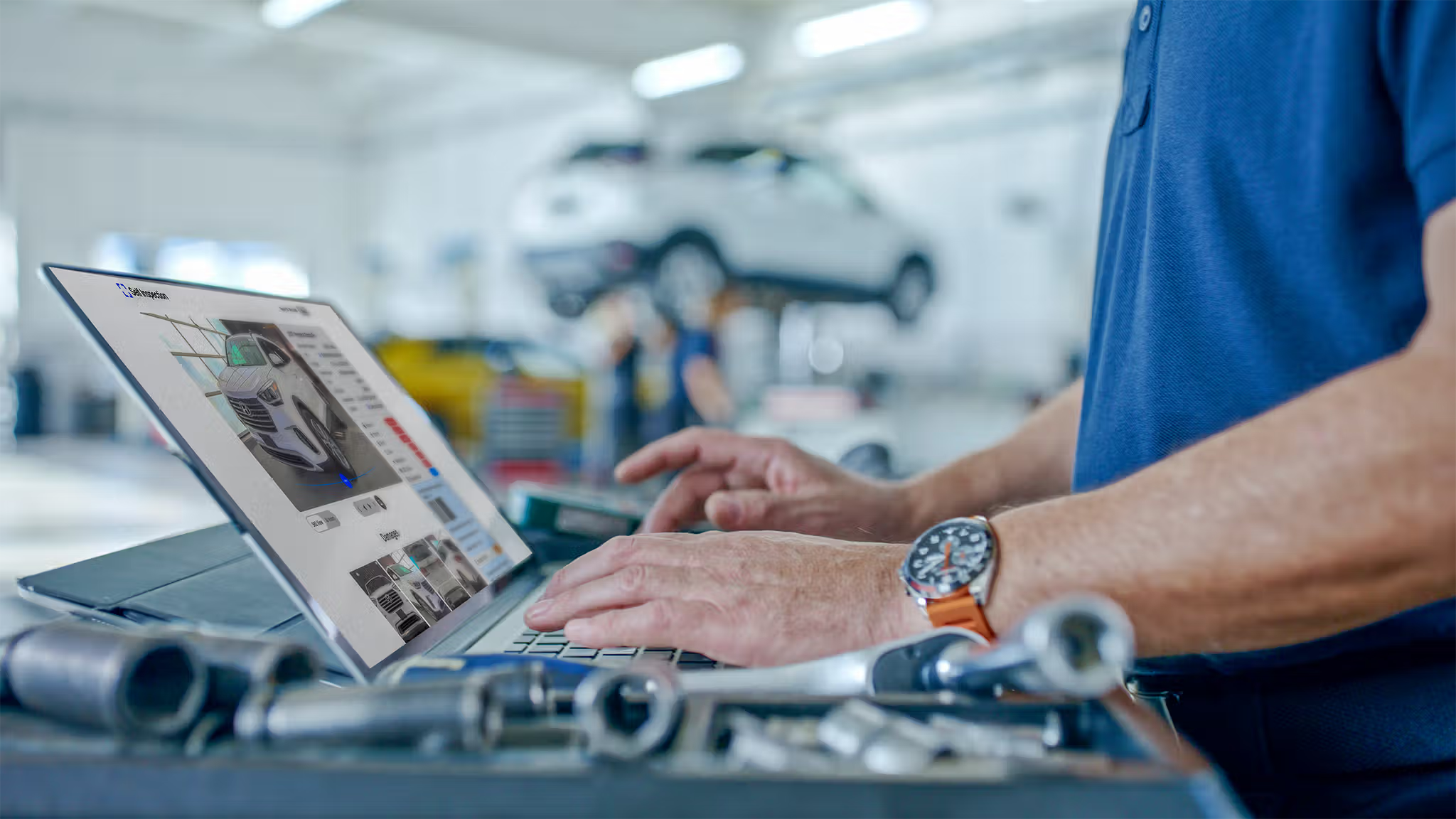
Mid-sized and enterprise repair operations face unprecedented operational pressures that threaten their competitive positioning. Skilled technician shortages drive labor costs upward while customer expectations for faster, more accurate service intensify. Traditional manual processes that sustained repair shops for decades now create bottlenecks that limit growth.
AI for auto repair technology addresses these fundamental challenges by automating time-intensive processes while improving accuracy standards that protect profitability. Modern repair enterprises implementing artificial intelligence report measurable operational improvements that translate directly to increased revenue and customer satisfaction.
Critical market indicators:
- 70% of car owners would use an AI agent if it meant being able to diagnose and address car issues in real time.
- Self Inspection operates in the $30 billion automotive inspections market with proven 90%+ accuracy rates.
- 67% of collision repair shops use AI-powered diagnostic tools to improve accuracy.
Enterprise repair operations require technology solutions that scale with business growth while maintaining quality standards that differentiate their services from competitors relying on outdated manual processes. This comprehensive guide reveals how successful repair shops implement AI vehicle repair tools to achieve operational excellence and sustainable competitive advantages.

Understanding AI in auto repair: Foundation concepts and applications
AI for auto repair encompasses a sophisticated set of tools that automate complex assessment, diagnostic, and estimation processes previously requiring extensive human expertise and time investment. These systems transform repair operations from reactive service providers to proactive diagnostic centers.
Modern AI applications extend far beyond simple automation tools. Being trained on 5 million+ images, Self Inspection’s advanced algorithms analyze vehicle body damage patterns, process diagnostic data, and correlate repair histories to provide insights that enhance decision-making across all operational areas while reducing dependency on scarce skilled labor.
What is AI auto repair technology and how does it work?
AI auto repair technology operates through interconnected systems that process multiple data streams - visual imagery, diagnostic codes, repair histories, and market pricing information for repair parts- to generate actionable insights that improve operational efficiency and customer satisfaction.
There are four core vehicle repair technology components:
- Computer Vision Systems: Automated damage detection and severity assessment through advanced image analysis algorithms.
- Machine Learning Algorithms: Pattern recognition for diagnostic troubleshooting and predictive maintenance scheduling.
- Natural Language Processing: Automated customer communication and technical documentation generation.
- Predictive Analytics: Failure prediction and resource optimization based on historical data analysis.
Enterprise repair operations benefit from these capabilities through reduced processing time and improved accuracy standards.
AI For auto repair operational integration benefits:
- Workflow Automation: Seamless integration with existing shop management systems and customer communication platforms.
- Real-Time Processing: Instant analysis and reporting capabilities that accelerate decision-making processes.
- Scalability: Technology capacity that grows with business operations without proportional staffing increases.
- Consistency Standards: Uniform evaluation criteria that eliminate subjective assessment variations.
Comprehensive car repair platform integration demonstrates how unified AI systems transform repair shop operations by connecting damage assessment, diagnostic analysis, and estimation processes into cohesive workflows that enhance both efficiency and customer experience.
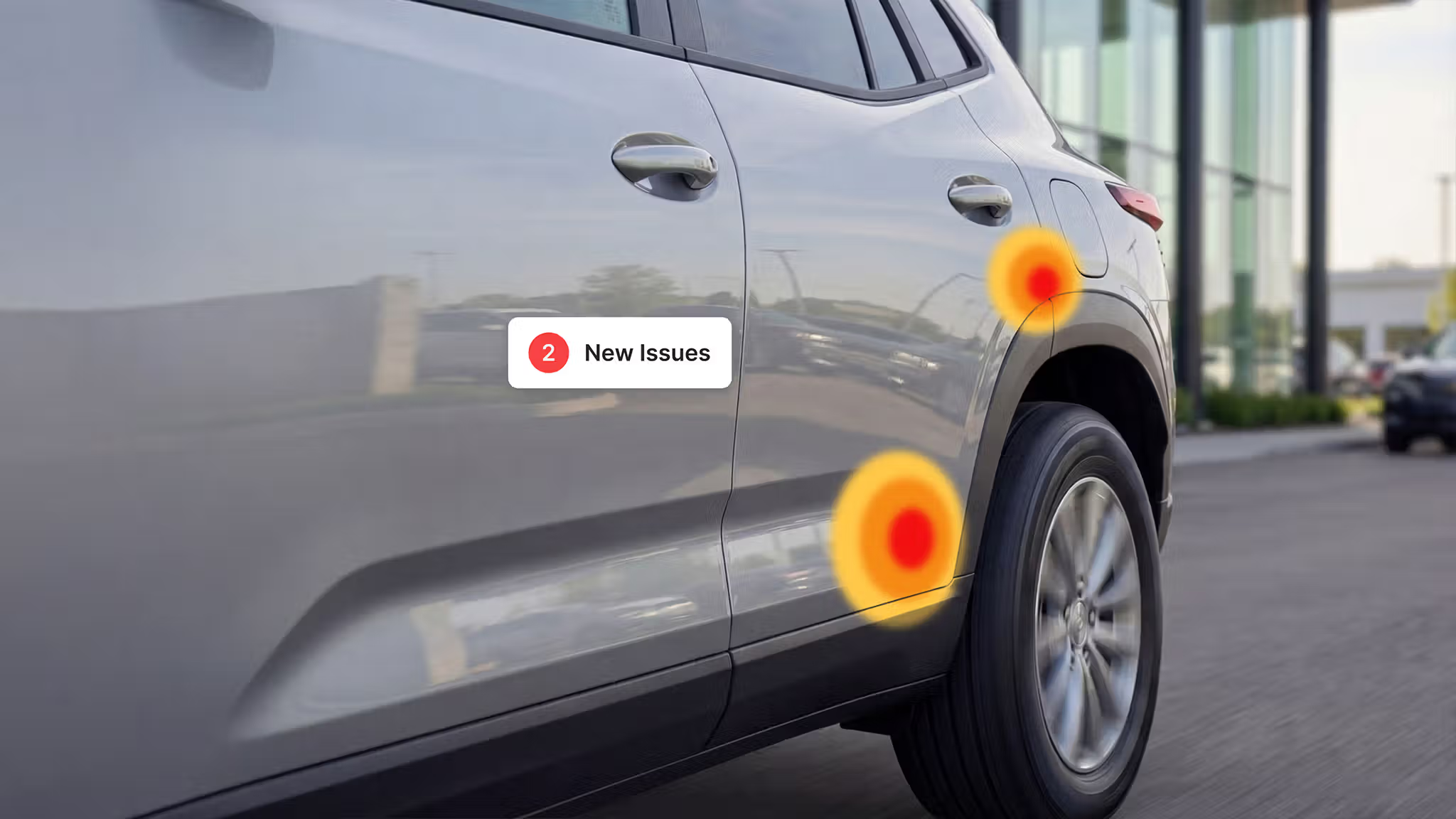
Key AI applications transforming modern repair shops
Enterprise repair operations implement AI technology across multiple operational areas to create synergistic improvements that increase efficiency gains while reducing error rates and customer satisfaction issues.
Primary implementation areas:
- Damage Assessment Automation: Computer vision systems identify and classify vehicle damage with precision exceeding human visual assessment capabilities.
- Diagnostic Acceleration: AI-powered troubleshooting reduces diagnostic time while improving issue identification accuracy.
- Repair Cost Estimation: Automated cost calculation incorporating real-time parts pricing, labor requirements, and regional cost factors.
- Customer Communication: Intelligent systems generate detailed reports and maintain customer updates throughout repair processes.
Vehicle damage estimation software can reduce vehicle inspection times by up to 60% while delivering complete condition reports in as little as 30 seconds. This processing speed enables repair shops to handle significantly more assessments with existing staff resources:
- Multi-Damage Recognition: Systems utilizing state-of-the-art deep learning algorithms can precisely identify, categorize, and assess various forms of damage, such as scratches, dents, cracks, and shattered pieces.
- Severity Classification: Automated algorithms assess damage complexity using standardized criteria that guide repair prioritization.
- Hidden Issue Identification: AI pattern recognition detects potential structural problems that manual inspection might miss.
- Cost Correlation: Systems correlate visible damage with actual repair requirements based on millions of repair scenarios.
- Service Lane Revenue Optimization: AI technology transforms underutilized service opportunities into revenue generators. Studies show that up to 41% of vehicles passing through service lanes have unnoticed repairable damage. AI-powered scanners and mobile applications identify these opportunities during routine service visits.
Customer experience enhancement:
- Faster Service Delivery: Preliminary estimates can be generated in under 90 seconds, improving consistency and freeing up human estimators to focus on complex cases.
- Transparent Documentation: AI-generated reports provide clear explanations that customers understand and trust.
- Professional Communication: Automated systems maintain consistent customer updates throughout repair processes.
- Accurate Expectations: Precise estimates eliminate surprise costs that damage customer relationships and shop reputation.
These applications work together to create operational transformations that extend beyond individual process improvements, establishing new standards for customer service excellence while optimizing resource utilization across repair operations.
Based on the attached content, I'll continue from where the blog left off, following the established outline and writing style for automotive professionals.
AI auto repair benefits: measurable ROI across all operations
AI auto repair technology delivers quantifiable improvements across every operational metric that directly impacts your bottom line.
Performance transformation metrics:
- AI tools help reduce human error in estimating repair costs by 40%.
- 80% of collision repair shops that adopted AI reported faster workflow processing.
- Machine learning algorithms can identify damage with 90%+ accuracy in image analysis.
These improvements extend beyond simple efficiency gains to encompass fundamental changes in how repair operations generate revenue, manage costs, and serve customers. Forward-thinking repair shops recognize these metrics as competitive intelligence that separates industry leaders from businesses struggling with traditional operational constraints.
Diagnostic speed and precision: Beyond human capabilities
How long does your most experienced technician require to diagnose complex electrical issues that span multiple vehicle systems? Traditional diagnostic approaches often consume 2-3 hours for comprehensive troubleshooting while AI-powered systems complete equivalent analysis in minutes.
AI auto repair diagnostic capabilities process vehicle data streams simultaneously - OBD2 codes, sensor readings, performance metrics, and historical patterns - to identify root causes that manual approaches miss. Advanced algorithms recognize failure patterns across millions of repair scenarios, enabling targeted solutions rather than trial-and-error approaches.
Diagnostic enhancement results:
- Multi-System Analysis: Simultaneous evaluation of engine, transmission, electrical, and safety systems reduces diagnostic time by 60%+.
- Pattern Recognition: AI identifies complex issue relationships indicating underlying problems before they create secondary failures.
- Real-Time Processing & Report Generation: Instant diagnostic recommendations enable immediate repair decisions and reports for customer communication.
AI-powered OBD2 diagnostics demonstrate how integrated mechanical inspection technology provides comprehensive under-the-hood analysis that identifies issues across all vehicle systems while generating detailed reports supporting repair recommendations.
Competitive operational advantages:
- Same-Day Service: Reduced diagnostic time enables completion of complex repairs within single customer visits.
- Higher Accuracy: Elimination of diagnostic errors prevents unnecessary parts replacement and comeback issues.
- Customer Confidence: Professional diagnostic documentation builds trust in repair recommendations and pricing.
- Technician Productivity: Advanced diagnostics free skilled technicians to focus on complex repair activities rather than routine troubleshooting.
Cost reduction through automated assessment and estimation
Manual repair estimation processes consume valuable technician time while introducing variables that compromise pricing accuracy and customer satisfaction. Even experienced estimators require 45-90 minutes per vehicle for comprehensive damage evaluation and cost calculation - time that directly impacts shop productivity and profitability.
Automated car repair estimation systems eliminate these operational bottlenecks by processing damage information instantaneously while accessing real-time pricing data from integrated supplier networks. AI algorithms match damaged components with precise manufacturer specifications and current market pricing, generating accurate estimates that protect profit margins.
Cost optimization & profit-maximization capabilities of car repair AI:
- Labor Efficiency: Automated estimation reduces assessment time from hours to minutes, freeing technicians for revenue-generating activities.
- Pricing Accuracy: Real-time parts pricing integration prevents estimation errors that create cost overruns or competitive disadvantages.
- Margin Protection: Consistent estimation standards eliminate underpricing scenarios that erode profitability on repair projects.
- Competitive Positioning: Accurate estimates enable aggressive pricing while maintaining healthy profit margins.
Self Inspection's AI technology integrates with industry-leading parts databases and supplier networks, ensuring estimates reflect current market conditions while incorporating regional variations affecting actual repair costs. This integration eliminates manual research requirements while reducing errors that impact operational profitability. This brings in a number of benefits to your repair shop:
- Resource Allocation: Accurate estimates enable better project scheduling and technician assignment optimization.
- Customer Trust: Transparent pricing builds confidence while reducing disputes that damage business relationships.
- Insurance Relations: Consistent estimates improve approval rates with insurance partners and reduce supplemental negotiations.
- Cash Flow Enhancement: Faster estimate approval accelerates repair commencement and payment processing cycles.
Cost reduction benefits accumulate over time as shops process more vehicles with existing staff while maintaining quality standards that generate customer loyalty.
AI Damage detection revolution: Computer vision for repair shops
Traditional car damage assessments rely on visual and mechanical inspection techniques that vary significantly based on technician experience, environmental conditions, and time constraints.
Can your current assessment process consistently identify subtle paint damage that affects vehicle value?
AI car repair systems revolutionize this detection process through computer vision algorithms trained on millions of automotive damage scenarios. Advanced image analysis identifies damage types, locations, and severity levels with precision exceeding human assessment capabilities while maintaining consistency across all evaluation scenarios.
Modern repair operations require damage detection capabilities that support accurate estimation, insurance documentation, and customer communication without depending on individual technician expertise or environmental variables that affect assessment quality.
Automated damage recognition: From chips to structural issues
Computer vision technology analyzes vehicle imagery at pixel level, identifying damage patterns invisible to routine visual inspection while classifying severity levels that guide repair prioritization and cost estimation. AI systems distinguish between different damage categories - paint chips, dents, scratches, structural deformation - while assessing repair complexity requirements.
Advanced detection capabilities:
- Comprehensive Coverage: AI evaluation identifies damage across all vehicle surfaces including complex curves and reflective areas challenging for human assessment.
- Severity Classification: Automated algorithms assess damage complexity using standardized criteria eliminating subjective interpretation variations.
- Pattern Analysis: Recognition of damage combinations indicating collision history or underlying structural issues requiring additional investigation.
- Quality Documentation: High-resolution imagery with AI-generated annotations supporting insurance claims and customer communications.
AI vehicle damage detection technology demonstrates how automated recognition capabilities identify over 200 distinct damage types while calculating precise repair requirements through integration with manufacturer specifications and repair methodologies. As a repair service provider - such systems brings you several business benefits:
- Consistency Standards: Identical evaluation criteria applied regardless of assessment personnel or environmental conditions.
- Time Efficiency: Complete damage assessment accomplished in minutes rather than traditional hourly manual evaluations.
- Documentation Quality: Professional reports with photographic evidence supporting all damage claims and repair recommendations.
- Training Reduction: Automated systems eliminate dependency on extensive technician training for accurate damage assessment.
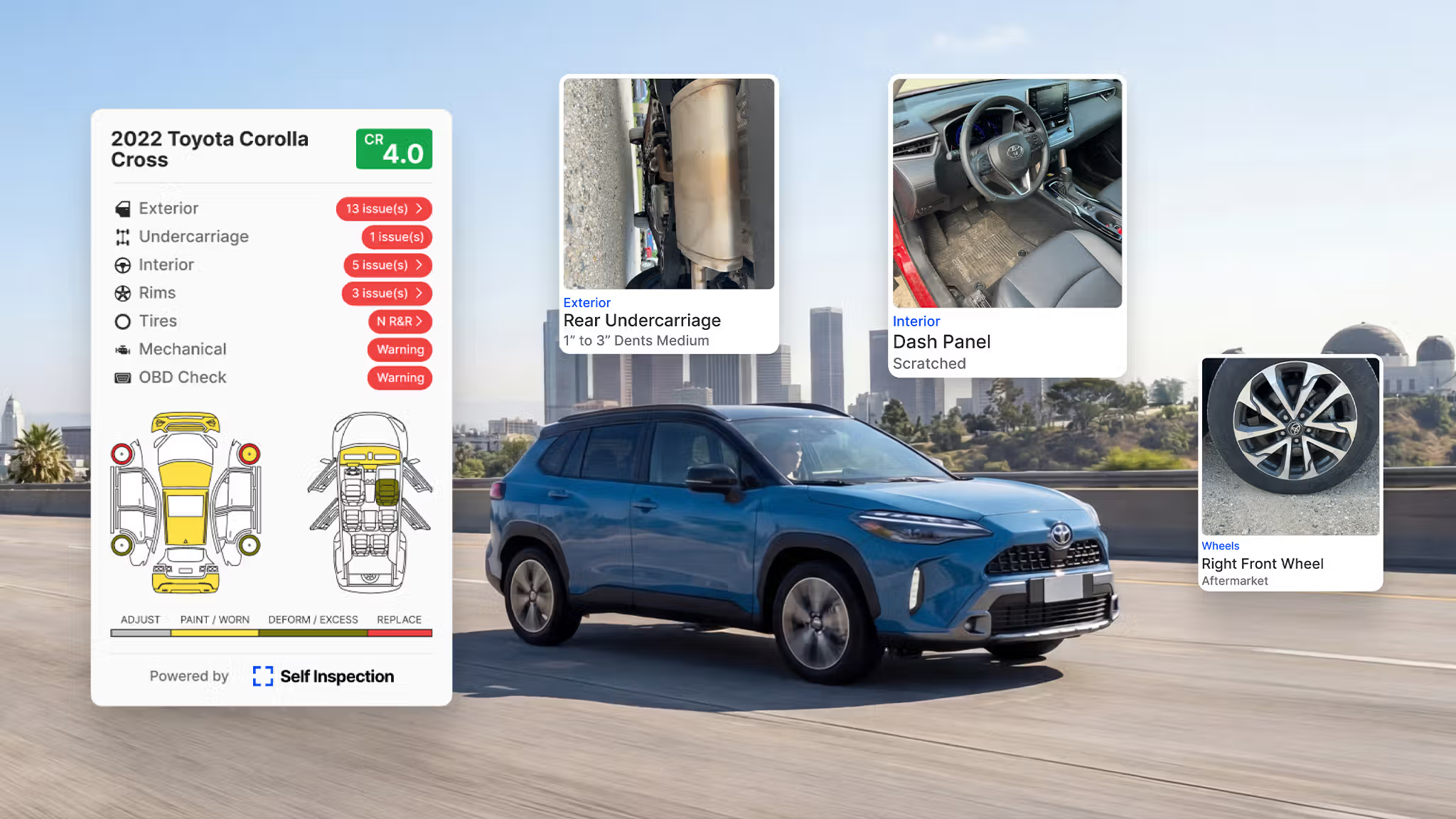
Real-time assessment with industry-first CR scoring
How do insurance adjusters and customers evaluate overall vehicle condition when presented with complex damage reports containing dozens of individual issues? Self Inspection's industry-first CR (Condition Rating) scoring system provides instant condition assessment that summarizes vehicle status for quick decision-making:
- Near-Instant Condition Summary: Comprehensive vehicle condition distilled into single numerical score enabling rapid assessment decisions.
- Standardized Communication: Universal scoring system facilitates clear communication between repair shops, insurance companies, and customers.
- Priority Identification: Automated ranking of damage severity guides repair sequencing and resource allocation decisions.
- Integration Ready: Scoring system designed for seamless integration with shop management software and insurance platforms.
Real-time processing capabilities enable immediate condition assessment during customer interactions, supporting faster decision-making while providing transparent documentation that builds trust and reduces disputes. This technological foundation enables repair shops to deliver superior customer experiences while maintaining operational efficiency that supports business growth and profitability objectives in competitive automotive service markets.

Building customer trust through transparent AI estimations
Customer trust hinges on pricing transparency that clearly explains repair requirements and associated costs without hidden charges. Traditional estimation methods often fail to provide this transparency due to subjective assessments and incomplete damage evaluation that leads to supplemental charges during repair processes.
AI-powered car damage estimation systems build customer confidence through detailed cost breakdowns that explain every repair requirement with supporting evidence and clear pricing justification:
- Transparent Cost Breakdown: Detailed separation of parts costs, labor requirements, and shop fees with clear explanations.
- Visual Evidence: Photographic documentation linking specific damage to required repairs and associated costs.
- Standardized Pricing: Consistent estimation criteria applied across all customers eliminating preferential pricing concerns.
- Warranty Information: Clear explanation of parts warranties and labor guarantees included with repair work.
Expert validation ensures estimates meet professional standards while building customer confidence in repair recommendations. Self Inspection's approach combines AI efficiency with human expertise to deliver industry-leading accuracy rates that support customer trust development.
These estimation capabilities transform customer interactions from adversarial pricing negotiations to collaborative repair planning discussions that build long-term business relationships and referral opportunities.
Implementation roadmap: Step-by-step AI adoption for repair shops
Successful AI implementation requires strategic planning that addresses technology integration, staff training, and operational workflow modifications without disrupting existing business operations.
How do successful repair shops transition from traditional processes to AI-enhanced operations while maintaining service quality and customer satisfaction?
The answer lies in a systematic implementation approach that minimizes operational disruption while maximizing technology benefits through phased deployment schedule and gradual staff adaptation and process refinement based on your unique needs.
Phase 1: AI readiness assessment and technology planning
Technology readiness evaluation determines implementation requirements while identifying potential obstacles that could complicate AI adoption or reduce expected benefits. Successful shops conduct comprehensive assessments covering infrastructure, staff capabilities, and operational workflows before committing to specific technology platforms.
Infrastructure evaluation components:
- Technology Compatibility: Existing shop management systems assessed for integration capabilities with AI platforms.
- Hardware Requirements: Current devices evaluated for AI software compatibility or upgrade requirements identified.
- Network Capacity: Internet connectivity and bandwidth assessed to support cloud-based AI processing requirements.
- Data Security: Existing security protocols reviewed to ensure compliance with AI platform requirements and customer data protection.
When it comes to staff readiness assessment, you need to identify training requirements while evaluating change management challenges that could impact successful technology adoption:
- Technical Expertise: Current staff technology skills assessed to determine training program scope and duration.
- Change Acceptance: Staff attitudes toward technology adoption evaluated to identify potential resistance and develop support strategies.
- Workflow Analysis: Existing processes documented to identify optimal integration points for AI technology implementation.
- Performance Baselines: Current operational metrics established to measure AI implementation effectiveness and ROI calculation.
Phase 2: Technology integration and staff training programs
Technology integration strategy determines implementation success through careful planning that addresses both technical requirements and human factors affecting adoption rates. Successful shops develop phased rollout approaches that allow staff adaptation while maintaining operational continuity.
Integration Strategy Development:
- Pilot Program Design: Limited scope initial deployment to test technology capabilities and identify optimization opportunities.
- Workflow Modification: Existing processes adapted to incorporate AI capabilities while maintaining efficiency and service quality.
- System Integration: AI vehicle repair platform connected with existing shop management software to streamline data flow and eliminate duplicate entry.
- Performance Monitoring: Metrics established to track implementation progress and identify areas requiring additional support or training.
Phase 3: Performance monitoring and continuous optimization
Implementation success requires ongoing performance monitoring that tracks both operational improvements and staff adaptation to ensure expected benefits materialize while identifying opportunities for further optimization.
Performance measurement framework:
- Efficiency Metrics: Processing time improvements and throughput increases measured against baseline performance.
- Accuracy Improvements: Estimation accuracy and customer satisfaction scores tracked to demonstrate quality enhancements.
- Revenue Impact: Cost savings and revenue increases attributed to AI implementation documented for ROI calculation.
- Staff Productivity: Individual and team performance improvements measured to validate training effectiveness and identify additional support needs.
Continuous optimization ensures technology benefits expand over time through platform updates, additional training, and workflow refinements based on operational experience and performance data analysis. This systematic implementation approach ensures successful AI adoption while minimizing operational disruption and maximizing return on technology investment through strategic planning and continuous improvement processes.
Industry trends and future developments in AI auto repair
Automotive repair industries experience accelerating technology adoption that reshapes competitive landscapes while creating new opportunities for forward-thinking operations. How do current market trends predict future requirements for repair shop technology investments and operational capabilities?
Current market adoption and growth projections
Market adoption data demonstrates accelerating AI implementation across repair industries as competitive pressures and customer expectations drive technology investment decisions:
- 67% of collision repair shops use AI-powered diagnostic tools to improve accuracy, indicating widespread recognition of AI technology's operational value.
- Labor Shortage Solutions: Skilled technician scarcity forces shops to implement technology that enhances workforce productivity and reduces dependency on specialized expertise.
- Customer Expectation Evolution: 70% of car owners would use an AI agent if it meant being able to diagnose and address car issues in real time, driving demand for technology-enhanced service delivery.
- Insurance Industry Pressure: Insurers increasingly prefer shops with standardized AI documentation that accelerates claim processing and reduces dispute resolution costs.
- Competitive Differentiation: Technology-enabled shops demonstrate superior service quality that attracts customers while supporting premium pricing strategies.
Growth projections indicate continued acceleration as AI technology becomes more accessible while delivering proven operational benefits. Self Inspection operates in the $30 billion automotive inspections market, demonstrating substantial market opportunities for AI-enhanced assessment services.
Emerging AI technologies for repair shops
Next-generation AI capabilities extend beyond current damage detection and estimation applications to encompass predictive maintenance, customer communication automation, and operational optimization that creates comprehensive business intelligence platforms:
- Predictive Analytics: AI systems analyze repair patterns to predict vehicle maintenance needs while identifying potential failures before they occur.
- Customer Communication Automation: Intelligent systems generate personalized updates and explanations that enhance customer experience while reducing administrative burden.
- Operational Optimization: Machine learning algorithms optimize scheduling, resource allocation, and workflow management based on historical performance data.
- Quality Assurance: Automated systems monitor repair quality while identifying training opportunities and process improvements.
- Real-Time Integration: Vehicle telematics data integration enables continuous condition monitoring that predicts maintenance requirements and optimizes repair scheduling.
- Augmented Reality: Visual overlay systems guide technicians through complex repairs while providing real-time access to technical information and quality standards.
- Blockchain Documentation: Immutable repair records support warranty claims and vehicle history verification while building customer trust.
- IoT Connectivity: Connected repair equipment provides performance data that optimizes processes while ensuring quality standards.
Emerging technologies integrate with existing AI platforms to create comprehensive operational ecosystems that support business growth through enhanced capabilities and competitive differentiation. Technology roadmaps indicate continued innovation that expands AI capabilities while maintaining accessibility for repair operations seeking competitive advantages through advanced operational capabilities and superior customer service delivery.
Frequently asked questions: AI for auto repair implementation
What ROI can repair shops expect from AI implementation?
Repair shops typically achieve full ROI within 6-12 months through combined efficiency gains, accuracy improvements, and customer satisfaction enhancements. Initial cost savings appear within 30-60 days through reduced assessment time and improved estimation accuracy.
Specific ROI components include 30-50% throughput increases with existing staff, 40% reduction in estimation errors, and accelerated insurance approvals that improve cash flow. Premium pricing opportunities emerge through superior service quality documentation.
How does AI auto repair technology integrate with existing shop management systems?
AI auto repair platforms provide standard API connectivity that enables seamless integration with existing shop management software, customer communication systems, and insurance platforms. Cloud-based architecture eliminates hardware requirements while supporting real-time data synchronization.
Integration processes typically require minimal technical configuration while providing immediate access to enhanced assessment capabilities through familiar operational interfaces. Staff training focuses on utilizing AI insights rather than learning complex technical systems.
What training do technicians need for AI car repair systems?
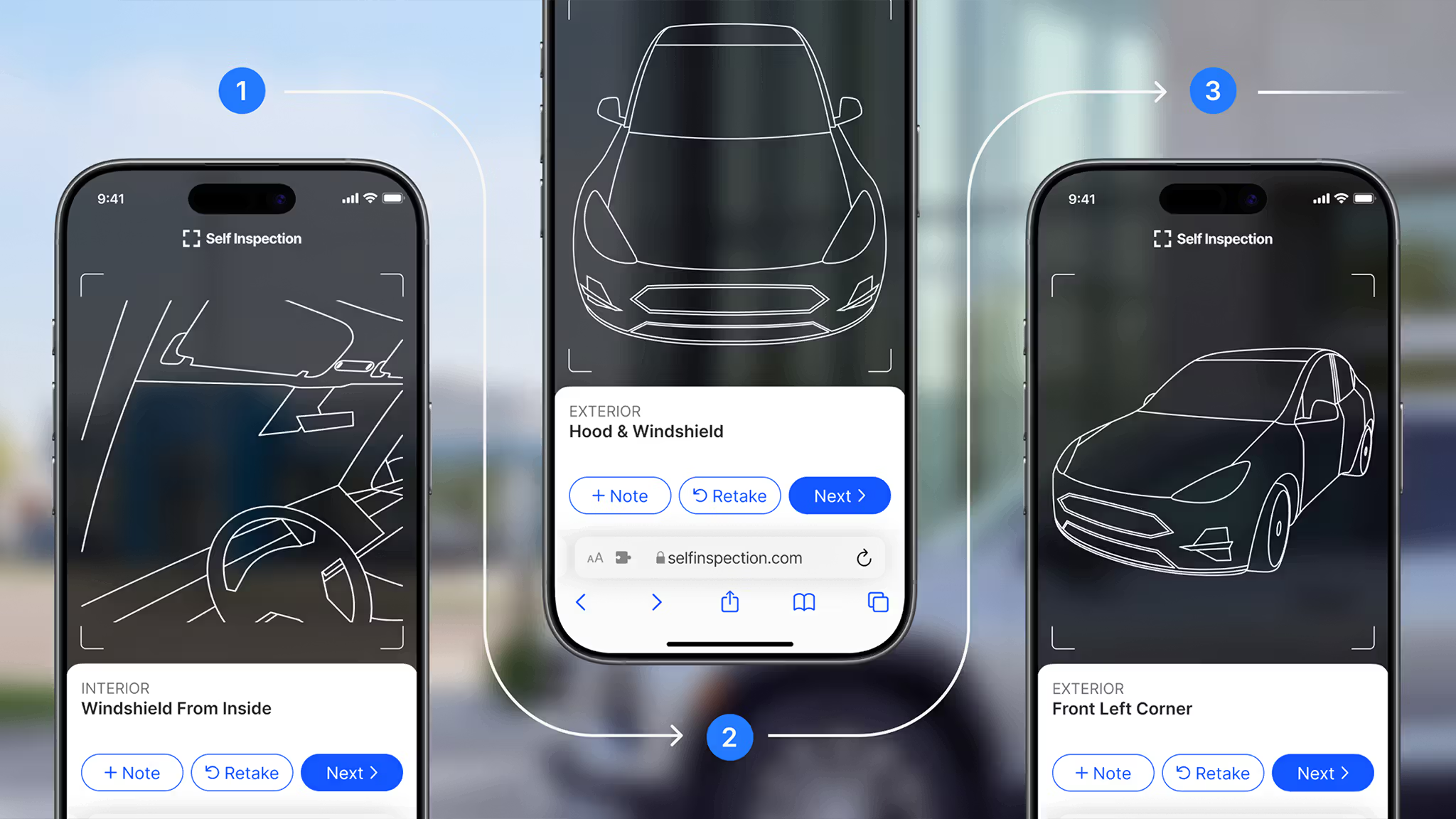
Training requirements remain minimal due to intuitive smartphone-based interfaces that leverage familiar mobile device interaction patterns. Comprehensive programs cover AI platform operation, customer communication techniques, and optimization strategies for maximum operational benefit.
Successful training approaches combine hands-on practice with business impact education, enabling technicians to understand both technical operation and strategic advantages. Ongoing support ensures continuous skill development as AI capabilities expand.
Can AI handle all vehicle damage types and diagnostic scenarios?
Current AI technology handles 90%+ of routine damage assessment and diagnostic scenarios with expert validation ensuring accuracy for complex cases. AI systems excel at standard damage types while human expertise remains valuable for unusual scenarios requiring contextual interpretation.
Machine learning algorithms can identify damage with 92% accuracy across diverse damage types while continuous learning improves capabilities through exposure to new scenarios and expert feedback.
How does AI improve customer satisfaction in repair operations?
AI technology enhances customer satisfaction through faster service delivery, transparent pricing, and professional documentation that builds trust. AI-generated reports provide clear explanations that customers understand while eliminating surprise costs that damage relationships.
Consistent service quality and accurate estimates eliminate common sources of customer dissatisfaction while professional presentation differentiates shops from competitors using traditional assessment methods. AI implementation consultation provides strategic guidance for maximizing customer experience benefits through technology adoption.

Ready to get started?
Streamline lease returns, reduce disputes and accelerate remarketing readiness - all from one simple platform.