AI-Powered Predictive Maintenance in Auto Financing: Reduce Risks & Optimize Warranty Costs

The automotive finance sector is navigating unprecedented challenges. With vehicle complexity increasing and maintenance costs rising sharply, lenders and warranty providers face growing uncertainty in assessing risk and pricing extended warranty services fairly. In fact, with AI fleet maintenance costs could be cut by up to 20%, with potential annual savings of $627 billion for the automotive industry by 2025, yet many financial institutions still rely on traditional actuarial methods that cannot keep pace with real-world vehicle conditions.
Enter AI-powered predictive maintenance—a game-changing technology that leverages real-time vehicle data and machine learning models to forecast when maintenance will be necessary, helping lenders better evaluate loan risk and warranty providers optimize costs.
As this shift unfolds, platforms like Self Inspection play a pivotal role by enabling financial services to access trusted, AI damage estimation data seamlessly integrated into their lending workflows.
This blog dives deep into the transformative power of predictive maintenance in automotive finance and how AI technology is laying the foundation for a smarter, more resilient financial ecosystem. Let’s dive in!

Understanding predictive maintenance in auto financing
Predictive maintenance represents a proactive strategy that anticipates vehicle component failures before they occur, contrasted with traditional reactive maintenance that reacts only after a breakdown happens.
AI-enabled predictive auto maintenance vs. traditional maintenance
Traditional maintenance in automotive finance involves scheduled servicing often based on mileage or time intervals, which may result in unnecessary repairs or unexpected failures between services. AI-Enabled Predictive maintenance, instead, leverages machine learning technology to analyze real-time data, historical vehicle health records, and usage patterns to project failure points accurately.
The latter approach reduces avoidable costs and operational disruptions for lenders and warranty providers alike by focusing resources on vehicles that genuinely require maintenance.
The result? Hundreds of thousands of dollars saved on manual maintenance checks, that transforms maintenance from a cost center into a strategic tool for financial risk management.

The rising role of predictive maintenance in automotive finance
Facing rapid increases in warranty claim expenses—such as Ford's $800 million rise in warranty costs in Q2 2024—and the growing complexity of modern vehicles, predictive maintenance is becoming indispensable to operations. It not only improves cost forecasting but also enhances regulatory compliance and customer satisfaction by preventing unexpected breakdowns.
The market validates this transformation: the global automotive predictive analytics market size was estimated at USD 1.77 billion in 2024, and is projected to reach USD 16.81 billion by 2033.
For automotive finance professionals looking to stay competitive, embracing predictive maintenance powered by AI platforms like Self Inspection's AI Vehicle Damage Detection is no longer optional but essential.

The role of artificial intelligence in predictive maintenance
Artificial Intelligence lies at the core of modern predictive maintenance solutions, fueling their ability to analyze complex vehicle data and provide actionable insights. Here’s how these technologies work together to provide operational benefits to automotive professionals:
Core AI technologies: machine learning, deep learning & data analytics
Machine learning models learn from vast datasets of vehicle operation, maintenance history, and failure patterns to identify early signs of component degradation. Deep learning techniques enhance this by recognizing intricate relationships within sensor data, enabling precise prediction of maintenance needs.
Predictive analytics platforms apply these models to generate probabilities for failures and optimized maintenance scheduling, reducing downtime and costs effectively. AI systems can predict equipment failures with 22% accuracy up to 10 days in advance, maintaining a low 2.5% false-positive rate, providing sufficient lead time for proactive intervention.
Leveraging real-time data: sensors, telematics & vehicle connectivity
Critical to AI's effectiveness is the continuous flow of data from multiple sources: OBD2 diagnostic tools, telematics units monitoring vehicle position and driving behavior, and increasingly prevalent connected vehicle technologies. This real-time data provides rich input that AI models analyze to detect anomalies and emergent faults before becoming critical.
Modern vehicles generate thousands of data points daily, from engine performance metrics to brake system diagnostics. When aggregated and analyzed through sophisticated algorithms, this data becomes the foundation for accurate predictive maintenance forecasting.
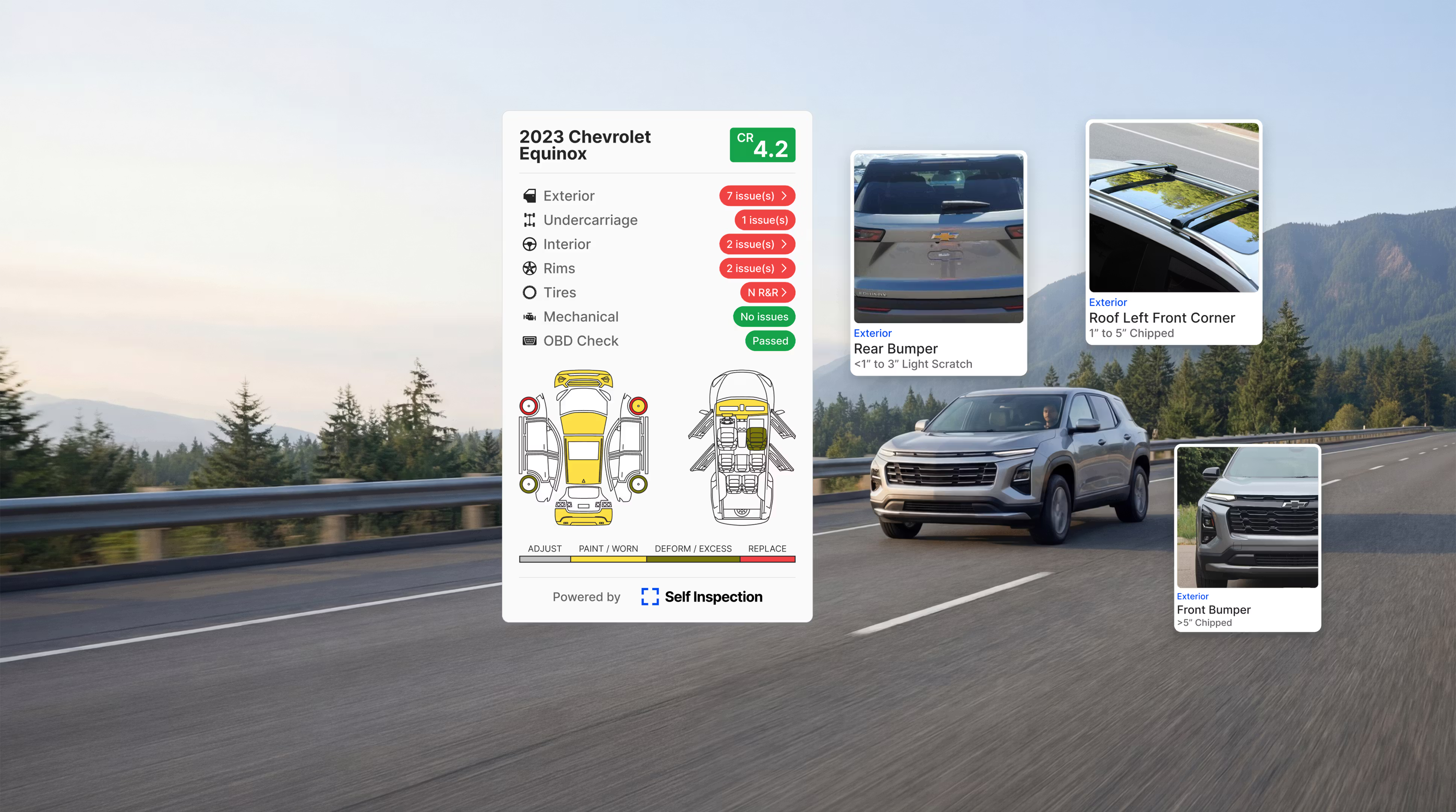
Self Inspection AI vehicle inspection technology overview
Self Inspection complements predictive maintenance with our best-in-class AI vehicle inspection platform. Using advanced computer vision and expert validation, we deliver highly accurate condition assessments covering body damage, mechanical issues, and overall vehicle health.
Our platform operates seamlessly within automotive finance environments, integrating vehicle inspection reports with predictive maintenance data to empower lenders, warranty providers, and fleet managers with comprehensive, reliable insights.
Business impact for auto finance institutions
The integration of AI-powered predictive maintenance into automotive finance opens new avenues for reducing risk, optimizing costs, and elevating compliance standards. Financial institutions implementing these technologies report significant reduction in operational costs and higher customer satisfaction.
Reducing lending risk with advanced failure modeling
Financial institutions gain a powerful toolkit for assessing loan risk via predictive failure models that analyze vehicle-specific data and maintenance histories. These models enable more precise collateral valuation and default probability estimation by forecasting potential failures before they occur, providing lenders with early warning to mitigate risk.
Our advanced machine learning algorithms can identify vehicles likely to experience costly repairs that could impact the borrower's ability to maintain loan payments. This insight enables proactive customer communication and support, potentially preventing defaults while preserving customer relationships.
Optimizing extended warranty and claims management with AI
AI-enhanced predictive insights allow warranty providers to dynamically price coverage based on individual vehicle condition and estimated maintenance costs, moving away from one-size-fits-all policies. Proactive claims management, aided by AI fraud detection capabilities, reduces unnecessary payouts while maintaining customer satisfaction.
The impact is substantial: predictive maintenance can reduce unplanned downtime by up to 50% and lower maintenance costs by 10–40%. These savings translate directly to improved warranty profitability and more competitive pricing for customers.
Driving compliance and risk mitigation
Accurate documentation and transparent reporting powered by AI ensure compliance with evolving financial regulations and consumer protection laws. Our technology enables institutions to manage risk proactively and meet industry standards effectively.
AI-generated condition reports provide the detailed documentation required for regulatory compliance while supporting transparent customer communication about vehicle conditions and associated risks.
Operational benefits for lenders, fleet managers, and vehicle owners
AI-powered predictive maintenance drives tangible operational advantages across multiple stakeholders in automotive finance, creating value throughout the vehicle ecosystem.
By combining real-time vehicle inspection data with predictive analytics, lenders gain refined underwriting accuracy and portfolio risk management:
- Fleet managers leverage precise maintenance cost forecasting to optimize budgets and reduce unexpected expenses
- Vehicle owners benefit from transparent visibility into their vehicles' health and anticipated upkeep costs.
- Lenders can offer more competitive rates to low-risk vehicles while appropriately pricing higher-risk loans.
This enhanced visibility enables better financial planning and reduces the uncertainty that traditionally plagued automotive finance decisions.
Reducing vehicle downtime and boosting asset utilization
Unplanned repairs and breakdowns significantly impact fleet availability and asset value. Predictive maintenance helps minimize downtime by scheduling repairs proactively, extending vehicle lifecycles, and optimizing operational readiness.
The financial impact extends beyond immediate repair costs—preventing major failures preserves resale value and reduces the total cost of ownership, benefiting both lenders and borrowers throughout the loan lifecycle.
Streamlining loan processing and warranty services
Integrating AI-generated inspection reports into loan workflows accelerates credit decisions and warranty claims processes. Automated, transparent documentation reduces manual overhead and expedites approvals, creating smoother experiences for both lenders and customers.
This streamlining creates competitive advantages through faster processing times and more accurate decision-making, essential factors in today's fast-paced automotive finance market.
Learn how our smart inspection solutions enable these benefits through Rental Car Inspections and comprehensive vehicle assessment capabilities.
Overcoming implementation challenges in AI predictive maintenance
Successfully implementing AI-powered predictive maintenance requires addressing technical, operational, and organizational challenges that can impact adoption success. Forward-thinking institutions approach these challenges systematically to maximize benefits while minimizing disruption.
Addressing model accuracy and managing maintenance complexity
AI model accuracy depends on comprehensive training data, continuous validation, and expert oversight. Self Inspection addresses this through our hybrid approach that combines AI efficiency with human expert validation, ensuring high accuracy in damage detection while maintaining the reliability required for financial applications.
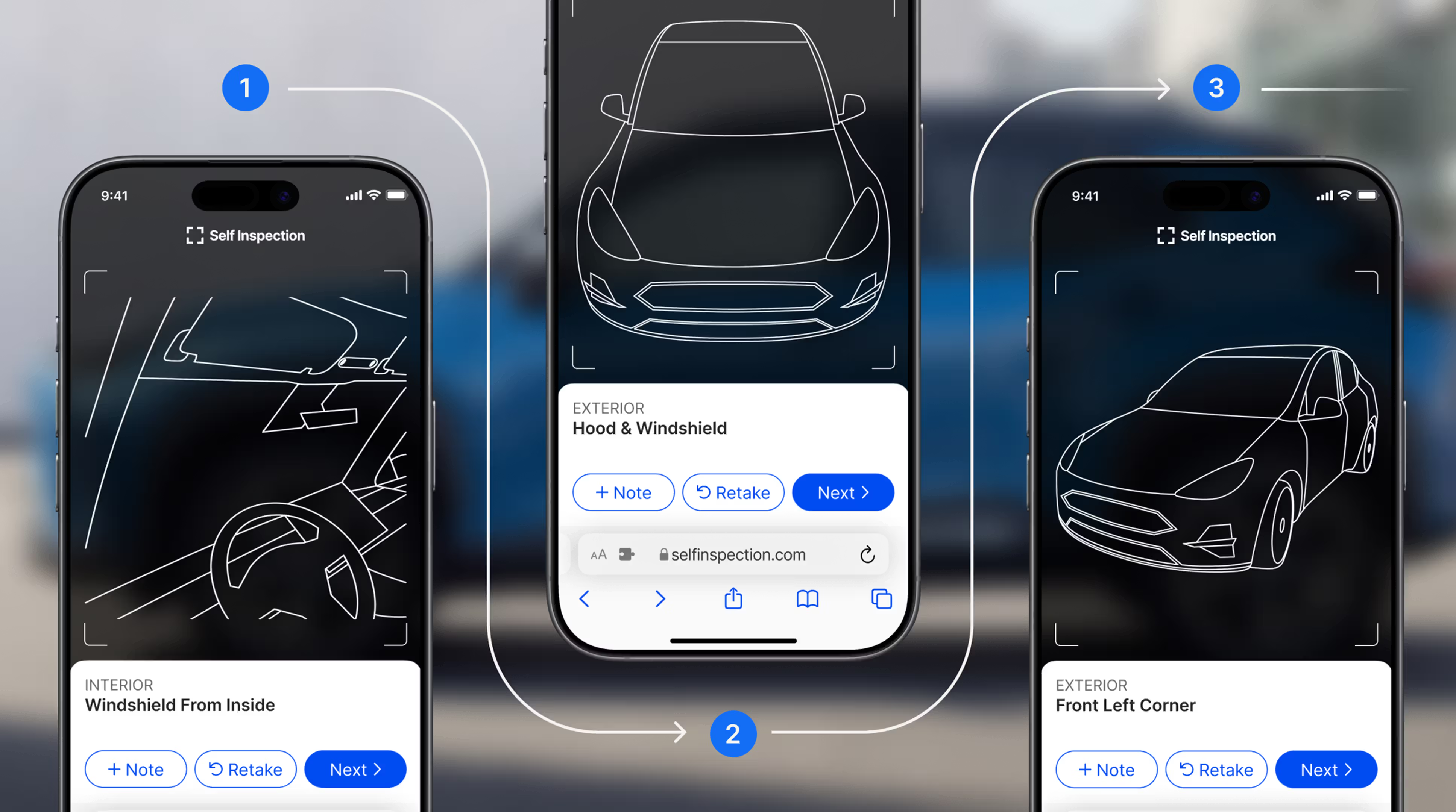
Managing complexity involves providing 360-degree video-guided interfaces that enable non-technical staff to access and understand predictive insights. Automated workflows also reduce manual complexity while maintaining the flexibility needed for diverse operational requirements.
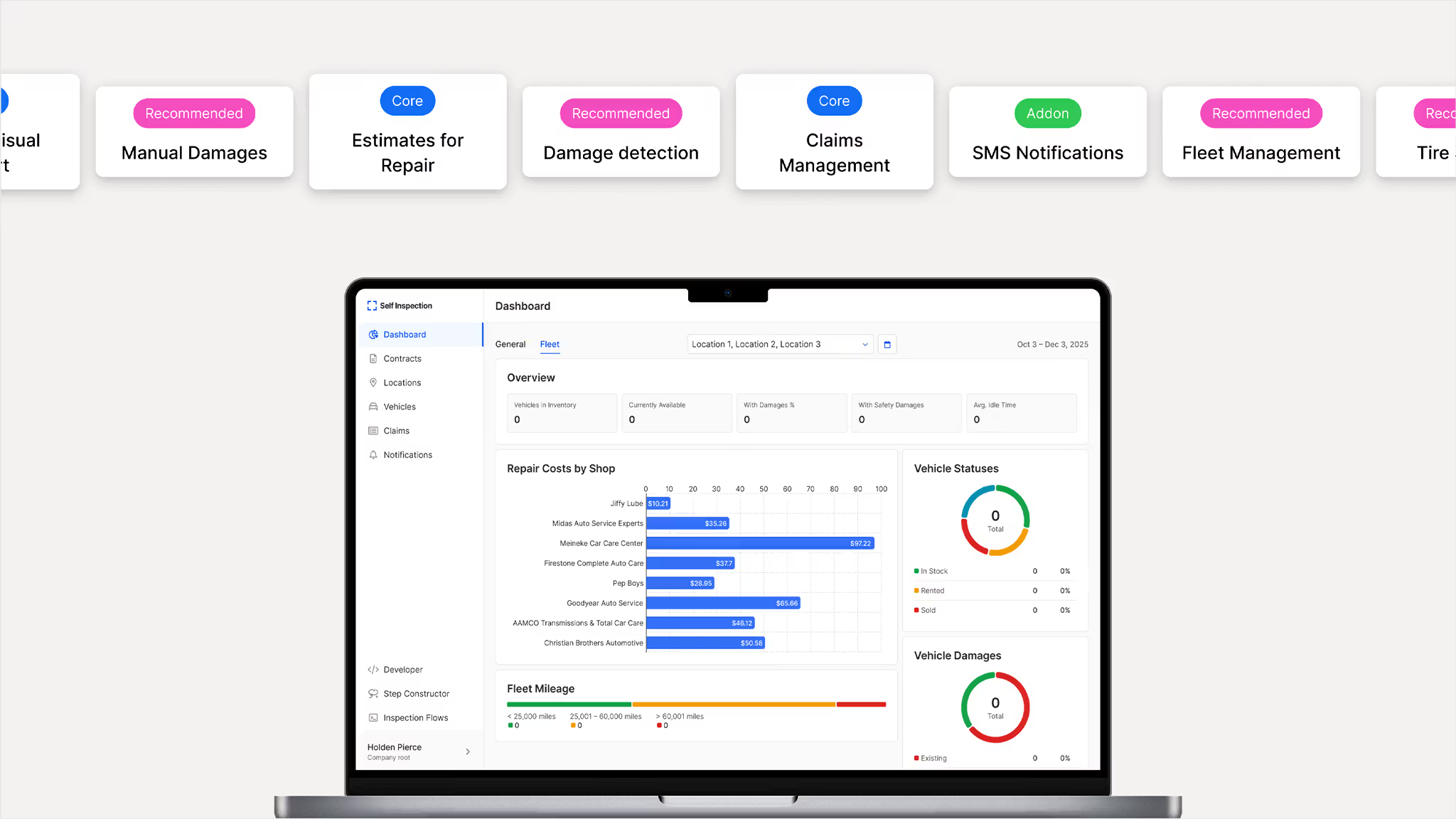
How auto financing juggernauts leverage Self Inspection’s AI solutions?
Financial institutions implementing Self Inspection's AI-powered inspection platform report significant improvements in loan processing efficiency, warranty cost management, and customer satisfaction through accurate vehicle condition assessment.
Our clients consistently achieve enhanced risk assessment accuracy leading to improved portfolio performance, reduced warranty claim disputes through transparent condition documentation, streamlined loan processing enabling competitive market advantages, and improved customer retention through professional service delivery and accurate pricing.
The results speak for themselves: institutions using our platform report faster processing times, more accurate risk assessment, and higher customer satisfaction scores compared to traditional manual inspection methods.
Conclusion: the future of AI in automotive finance
AI-powered predictive maintenance represents the next evolution in automotive finance, offering unprecedented opportunities for risk reduction, cost optimization, and competitive advantage.
Strategic recommendations for automotive finance institutions include embracing early adoption to establish first-mover advantages, partnering with proven AI platforms like Self Inspection to accelerate implementation, pursuing gradual integration to reduce risk while building organizational capabilities, and committing to continuous improvement through ongoing model refinement and validation.
The automotive finance industry stands at an inflection point where traditional methods give way to AI-powered insights. Organizations embracing predictive maintenance today will establish market leadership while those waiting face increasing competitive pressure and operational inefficiency. Ready to explore the future? Book a demo.
FAQ: your essential guide to AI predictive maintenance in auto finance
Understanding the technical and business implications of AI predictive maintenance helps finance professionals make informed technology adoption decisions. Here are the most critical questions automotive finance leaders ask about implementing AI-driven maintenance prediction systems.
How accurate are AI-powered maintenance cost predictions for lending decisions?
AI systems like Self Inspection achieve up to 99% accuracy in vehicle condition assessment through expert-validated algorithms trained on millions of vehicle images. AI systems can predict equipment failures with 22% accuracy up to 10 days in advance, maintaining a low 2.5% false-positive rate for critical lending decisions.
How do AI predictive maintenance systems integrate with existing lending platforms?
Modern AI car maintenance platforms provide comprehensive API seamless integration with existing loan management systems, CRM platforms, and financial reporting tools. Implementation typically involves gradual data integration, workflow customization, and staff training to ensure smooth transition without operational disruption. All of these can be completed within 2-4 months.
What vehicle data is required for effective predictive maintenance modeling?
Effective predictive maintenance requires OBD2 diagnostic data, maintenance histories, usage patterns, and environmental conditions. Our Vehicle Mechanical Inspection capabilities demonstrate comprehensive data collection that supports accurate predictive modeling while maintaining customer privacy and regulatory compliance.
Can AI predictive maintenance reduce warranty fraud and false claims?
Yes, AI-powered systems excel at identifying suspicious claim patterns and unlikely failure scenarios through comprehensive analysis of vehicle condition, maintenance history, and usage data. Predictive models can flag potential fraud while supporting legitimate claims with detailed documentation that reduces disputes and processing time.

Ready to get started?
Streamline lease returns, reduce disputes and accelerate remarketing readiness - all from one simple platform.