How Vehicle Condition Intelligence Is Transforming Auto Financing

The automotive finance industry stands at a transformational crossroads where traditional lending practices collide with digital innovation. As a finance professional, you're witnessing firsthand how over 80% of auto loan applications are expected to be digital by 2028, fundamentally reshaping customer expectations and operational requirements.
This isn't just about going paperless—it's about leveraging artificial intelligence to revolutionize how you assess risk, process applications, and make lending decisions. The global digital lending market is projected to reach $20.5 billion by 2026, growing at a CAGR of 12.6%, driven by institutions that recognize AI's potential to transform their competitive position.
Key performance improvements already being realized:
- Processing speed: AI-driven loan approval systems reduce processing time by 30-40%
- Cost reduction: AI-powered risk prediction models can reduce lending costs by 38.9% through improved default prediction accuracy
- Operational efficiency: Automating data extraction alone can slash 30-40% of hours spent on manual data entry
At the heart of this transformation lies precise ai vehicle condition reports - the collateral intelligence that can make or break your lending decisions. Self Inspection's platform, powered by over 10 million expertly annotated vehicle images, delivers the accuracy and reliability that transforms AI from a promising concept into a profit-driving reality.
Curious to see how we help automotive pros on a daily? Discover how our comprehensive approach supports modern automotive finance operations through our Platform Overview.

The digital revolution in auto financing: why AI matters now
Every day you delay AI adoption, your competitors gain ground in an increasingly digital marketplace. The transformation isn't coming—it's here, and it's reshaping every aspect of how automotive finance operates.
Traditional auto lending's breaking point
Your current challenges reflect systemic problems that manual processes simply cannot solve:
Operational bottlenecks:
- Manual underwriting processes taking 3-7 business days when customers expect instant decisions
- Vehicle appraisals varying by up to 15% between different assessors, undermining loan-to-value accuracy
- Paper-based documentation creating delays and compliance risks
- Limited fraud detection capabilities missing sophisticated schemes
Financial impact:
- Lost deals due to lengthy approval times while competitors offer instant decisions
- Portfolio risk exposure from inconsistent vehicle valuations
- Regulatory compliance costs increasing as requirements become more complex
- Customer acquisition costs rising as traditional methods lose effectiveness
How AI revolutionizes lending operations
Modern AI solutions address these pain points with measurable results that directly impact your bottom line:
- Instant decision-making capabilities: AI algorithms analyze comprehensive borrower profiles in real-time, incorporating traditional credit data alongside alternative indicators like payment behavior, employment stability, and social signals. AI can help loan providers cut new customer loan origination times by half while improving straight-through processing rates by 20-30%.
- Advanced fraud prevention: Machine learning models identify suspicious patterns across applications, catching fraudulent activities that would slip through manual reviews. These systems learn continuously, adapting to new fraud techniques and protecting both your assets and legitimate customers.
- Enhanced customer engagement: AI-powered chatbots and digital assistants maintain continuous borrower communication, providing 24/7 support while proactively identifying potential repayment issues before they become defaults.
- Precision vehicle assessment: The game-changer comes when AI-driven vehicle inspection data integrates with your underwriting process. Instead of relying on inconsistent human appraisals, you gain access to objective, detailed vehicle body damage reports that strengthen every loan decision you make.
Here, you can learn how our AI Vehicle Damage Detection technology delivers the precise vehicle intelligence that elevates your lending decisions above the competition.

Understanding vehicle inspection AI vs. underwriting AI: critical distinctions
Success in AI-powered automotive finance requires understanding how different AI systems work together to create comprehensive risk assessment capabilities. Too many lenders make the mistake of treating all AI as the same—when in reality, specialization is key to maximizing results.
Vehicle inspection AI: your collateral intelligence system
Vehicle inspection AI focuses exclusively on each car’s genuine physical condition, helping you secure the terms for vehicle loans, and delivering insights that traditional appraisals cannot match:
Core capabilities:
- Computer Vision Analysis: Advanced neural networks examine vehicle images with pixel-level precision, identifying damage patterns invisible to human inspectors
- Damage Classification: Recognition of over 6,000 different damage and vehicle part combinations, providing granular condition assessment
- Mechanical Health Integration: OBD2 diagnostic data reveals hidden issues that affect vehicle value and reliability
- Historical Data Analysis: Integration of maintenance records, accident reports, and usage patterns for comprehensive asset evaluation
Business impact:
- Consistent valuations eliminate the 15% variance typical in manual appraisals
- Accurate loan-to-value calculations strengthen portfolio performance
- Objective condition reports reduce disputes and support compliance documentation
Underwriting AI: your borrower risk intelligence system
Underwriting AI analyzes the human element of your lending equation, using sophisticated algorithms to assess creditworthiness and repayment probability of the person behind the wheel:
Advanced risk assessment features:
- Multi-Source Data Integration: Analysis of traditional credit data alongside alternative indicators
- Behavioral Pattern Recognition: Identification of spending habits and financial behaviors that predict loan performance
- Dynamic Risk Scoring: Real-time updates to risk profiles based on changing borrower circumstances
- Fraud Detection: Pattern recognition that identifies suspicious application elements
Operational benefits:
- Faster decision-making through automated risk calculation
- More accurate default prediction reducing portfolio losses
- Enhanced compliance through consistent evaluation criteria
When vehicle inspection AI and underwriting AI work together, they create a comprehensive risk profile that enables optimal loan structuring. You gain insights into both the borrower's capacity to repay and the true condition of the vehicle or collateral securing the loan—a combination that transforms uncertain decisions into confident approvals.
Explore how our Automated Damage Recognition technology creates the vehicle intelligence foundation that complements your borrower analytics for superior lending outcomes.
This integrated approach doesn't just improve individual loan decisions—it strengthens your entire portfolio by ensuring every lending decision is backed by complete, accurate information about both the borrower and the asset securing their loan.
The critical role of superior AI annotation in financing decisions
Most automotive finance professionals understand that AI can improve loan decisions, but few realize that the quality of data annotation—the meticulous labeling process that trains AI models—directly determines whether your AI investment delivers competitive advantage or costly disappointment.
How annotation quality affects vehicle valuation accuracy
The foundation of reliable AI-powered vehicle assessment lies in annotation quality, yet this critical factor remains invisible to most lenders until problems surface in portfolio performance. Research demonstrates that annotation quality can impact model performance by 15-20% for each 5% improvement in data labeling accuracy, making annotation excellence a direct driver of lending profitability.
The Cascading Impact of Poor Annotation Quality:
- Mislabeled damage in training datasets leads AI systems to incorrectly assess vehicle condition, affecting loan-to-value ratios by up to 12%
- Inconsistent labeling standards result in AI models that provide unreliable valuations, increasing portfolio risk exposure
- Incomplete damage categorization causes AI systems to miss critical condition factors that impact both vehicle value and repairability
- Annotation errors compound throughout the loan lifecycle, affecting everything from initial approval to collateral recovery
Consider the real-world impact: when an AI system trained on poorly annotated data misclassifies minor cosmetic damage as structural damage, it can trigger unnecessary loan declines that cost you profitable business. Conversely, when significant damage goes undetected due to inadequate training data, you're exposed to collateral value erosion that directly impacts loss rates.
Self Inspection's annotation excellence: 10+ million expert-validated images
Self Inspection has invested more heavily in annotation quality than any competitor, recognizing that superior data creates insurmountable competitive advantages in automotive finance applications.
Our comprehensive quality assurance process:
- Scale: Over 10 million expertly annotated vehicle images covering every possible damage scenario
- Precision: Multi-stage quality assurance ensuring 90%+ annotation accuracy across all vehicle types
- Expertise: Certified automotive technicians participate directly in expert annotation validation
- Coverage: 6,000+ damage and part combinations identified and classified
Continuous Improvement: Active learning algorithms identify and prioritize high-value annotation opportunities
Expert validation methodology:
- Initial Annotation: Experienced annotators label damage using standardized automotive terminology
- Technical Review: Certified automotive professionals validate mechanical implications
- Quality Control: Independent review team verifies annotation consistency and accuracy
- Continuous Feedback: Model performance data informs annotation refinement priorities
- Industry Updates: Regular updates incorporate new vehicle technologies and damage patterns directly into the cloud - and you get updates without having to invest into new infrastructure.
This rigorous process ensures that when you rely on Self Inspection's AI for lending decisions, you're leveraging the industry's most accurate and comprehensive vehicle condition intelligence.
Deep dive: AI-powered vehicle inspection technology stack
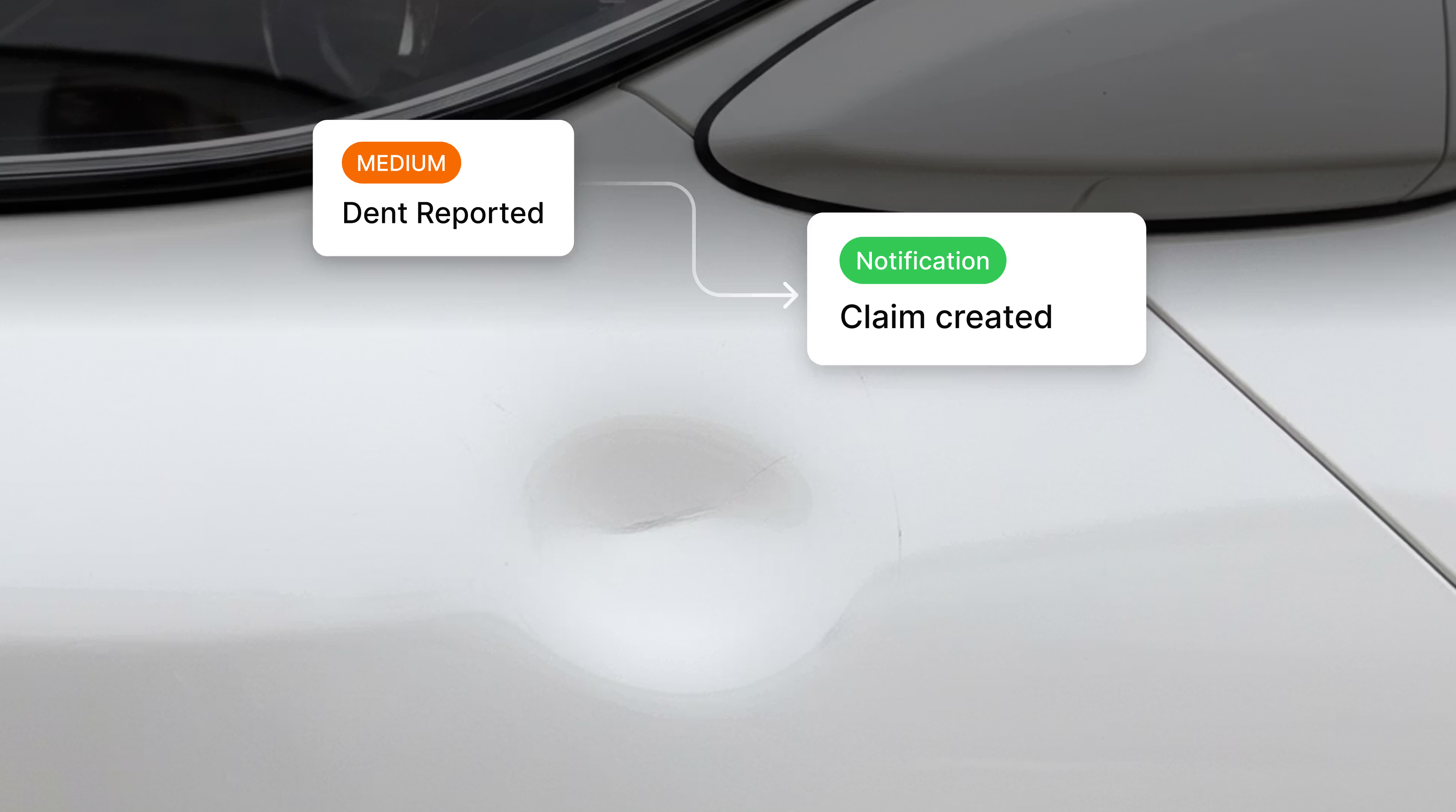
Understanding the technical architecture behind AI-powered vehicle inspection reveals why some platforms deliver transformational results while others provide marginal improvements over traditional methods.
Computer vision and machine learning architectures
Self Inspection's technical infrastructure leverages cutting-edge AI methodologies specifically optimized for automotive finance applications:
Advanced neural network technologies:
- Convolutional neural networks (CNNs): Analyze vehicle images with sub-second processing times while achieving pixel-level accuracy in damage detection
- Object detection algorithms: Identify specific damage types, locations, and severity levels with precision that surpasses human inspector consistency
- Semantic segmentation techniques: Provide detailed damage mapping essential for accurate repair cost estimation and vehicle valuation
- Real-time processing capabilities: Deliver comprehensive inspection results within minutes of image capture
Performance specifications:
- Processing speed: Sub-second image analysis enabling instant condition assessment
- Detection accuracy: 90%+ damage identification consistency across diverse lighting and environmental conditions
- Damage classification: Recognition of 6,000+ specific damage and vehicle part combinations
- Scalability: Cloud infrastructure supporting thousands of simultaneous inspections without performance degradation
Multi-modal data integration: visual, mechanical, and historical data
Comprehensive vehicle assessment requires sophisticated data integration that goes far beyond simple image analysis:
Data source integration:
- Visual inspection data: High-resolution imagery from multiple angles capturing complete vehicle condition
- OBD2 diagnostic integration: Mechanical health indicators and fault code analysis revealing hidden issues affecting vehicle value
- Historical maintenance records: Pattern analysis identifying vehicles with exceptional care or potential reliability concerns
- Environmental and usage factors: Geographic location, climate conditions, and usage patterns affecting vehicle condition and longevity
Advanced analytics capabilities:
- Predictive modeling: Algorithms that forecast future maintenance requirements and reliability issues
- Comparative analysis: Benchmarking against similar vehicles to identify exceptional condition or concerning deviations
- Risk scoring: Integrated assessment combining visual, mechanical, and historical factors into comprehensive risk profiles
- Trend identification: Pattern recognition that identifies emerging vehicle condition issues before they become widespread problems
Self Inspection's technological advantages
Our platform delivers unique competitive advantages through proprietary technology development and strategic infrastructure investments:
Differentiating technical capabilities:
- Advanced annotation techniques: Proprietary methodologies ensuring unmatched precision in damage classification and severity assessment
- Expert-validated training data: 10+ million images reviewed and validated by certified automotive professionals
- Scalable infrastructure: Cloud-based architecture supporting enterprise-level processing volumes with guaranteed uptime
- Integration-ready APIs: RESTful interfaces enabling seamless connectivity with existing loan management systems
Continuous innovation pipeline:
- Machine learning evolution: Regular model updates incorporating new vehicle types, damage patterns, and assessment techniques
- Technology integration: Ongoing development incorporating emerging technologies like IoT sensors and blockchain verification
- Performance optimization: Continuous refinement of processing speed, accuracy, and reliability metrics
- Industry adaptation: Rapid integration of new automotive technologies and changing industry standards
Security and reliability features:
- Enterprise-grade security: Advanced encryption and access controls protecting sensitive borrower and vehicle data
- Regulatory compliance: Built-in frameworks ensuring adherence to financial services regulations including GDPR and CCPA
- Audit trail capabilities: Comprehensive logging and documentation supporting regulatory review and internal compliance requirements
- Disaster recovery: Redundant systems and backup protocols ensuring continuous service availability
The technical sophistication of Self Inspection's platform isn't just about having advanced technology—it's about deploying that technology in ways that directly support better lending decisions, reduced operational costs, and improved competitive positioning in an increasingly digital automotive finance marketplace.
These improvements compound over time. A lender processing 1,000 applications monthly saves approximately 500 labor hours while approving 200-300 additional loans through improved straight-through processing rates.
Risk reduction and portfolio performance improvements
Enhanced risk assessment translates directly into improved portfolio performance:
- Default prediction accuracy: AI-powered risk prediction models can reduce lending costs by 38.9% through improved default prediction accuracy. This improvement comes from more precise vehicle valuations that strengthen collateral assessment and early identification of high-risk scenarios.
- Enhanced loan-to-value accuracy: Consistent, objective vehicle assessments eliminate the 15% variance typical in manual appraisals. This precision reduces portfolio risk while enabling more accurate loan pricing and terms.
- Fraud detection integration: AI-powered systems identify patterns indicative of fraudulent activities that manual processes often miss. Banks using AI-driven document automation improve fraud detection rates by 50%, protecting both lender assets and legitimate borrowers.
Customer experience enhancement through AI automation
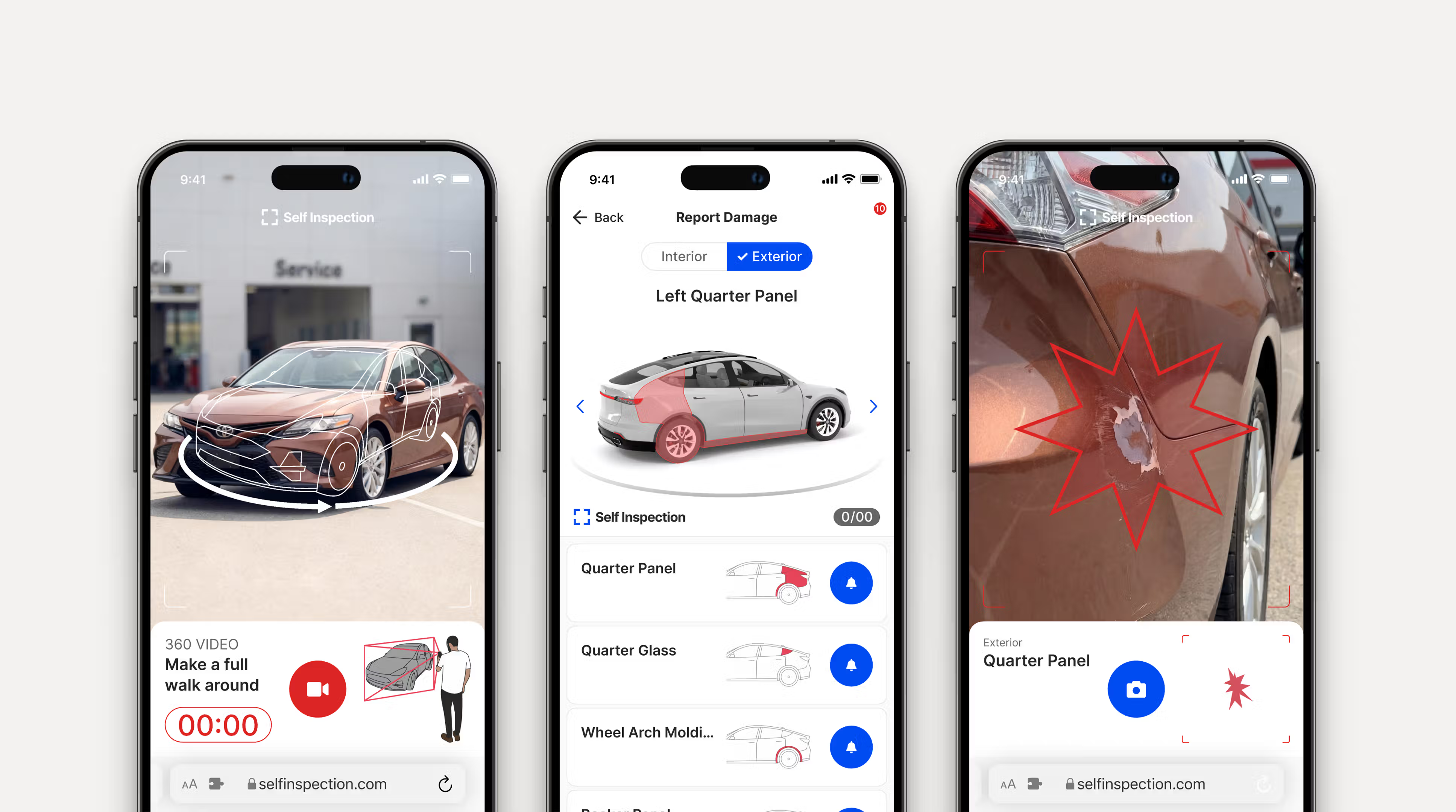
Modern borrowers expect digital-first experiences that match the convenience they receive from other financial services. AI-powered vehicle inspection delivers these experiences while strengthening lender operations.
Streamlined application and approval process
AI automation eliminates friction points that traditionally frustrated borrowers and slowed lending cycles:
- Mobile-first inspection capabilities: Borrowers use their smartphones to capture vehicle images following guided prompts that ensure comprehensive coverage. The intuitive interface requires no technical expertise while delivering professional-quality documentation.
- Real-time status updates: Automated notifications keep borrowers informed throughout the process—from initial application to final approval. Push notifications and email updates eliminate uncertainty while building confidence in your lending process.
- Reduced documentation requirements: AI-powered document analysis and data extraction minimize the paperwork burden on borrowers. Automated verification processes eliminate redundant information requests while accelerating application processing.
Transparent and fair assessment process
Transparency builds trust and reduces post-closing disputes:
- Clear condition impact explanations: Borrowers receive detailed reports explaining how specific vehicle conditions affect their loan terms. This transparency helps them understand the assessment process while appreciating the objectivity of AI-driven evaluations.
- Objective evaluation standards: Consistent AI assessment criteria ensure fair treatment regardless of borrower demographics or vehicle characteristics. This objectivity supports fair lending compliance while building customer trust.
- Educational resources: Interactive guides help borrowers understand the inspection process, condition assessment criteria, and how vehicle maintenance impacts future lending opportunities. This education builds long-term customer relationships.
Future outlook: innovations and market trends in AI auto financing
The automotive finance landscape continues evolving at breakneck speed, driven by emerging technologies that promise even greater efficiency, accuracy, and customer experience improvements. Understanding these trends positions your organization to capitalize on competitive opportunities while avoiding technological obsolescence.
Emerging technologies: Blockchain, IoT, and Advanced Analytics
Blockchain integration for vehicle history verification: Blockchain technology creates immutable vehicle history records that revolutionize collateral assessment. Each maintenance event, accident report, and ownership transfer becomes permanently recorded, eliminating title washing and VIN cloning fraud. This transparency enables more accurate risk pricing while reducing due diligence costs.
Internet of things (IoT) for real-time risk assessment: Connected vehicle technology provides continuous monitoring of:
- Driving behavior patterns that correlate with accident risk and loan performance
- Maintenance adherence indicating responsible ownership and collateral preservation
- Usage intensity affecting depreciation rates and residual value accuracy
- Geographic risk factors including theft rates and environmental exposure
Predictive analytics for proactive portfolio management: Advanced machine learning models integrate vehicle condition data with economic indicators, weather patterns, and market trends to:
- Forecast portfolio performance under various economic scenarios
- Identify early warning indicators of borrower distress or collateral degradation
- Optimize loan pricing based on predictive risk models rather than historical data
- Enable dynamic loan restructuring that prevents defaults while maintaining profitability
Conclusion: partnering with Self Inspection for competitive advantage
The transformation of automotive finance through artificial intelligence isn't a distant possibility—it's happening now, and the winners are already emerging. Organizations that embrace AI-powered vehicle inspection gain immediate competitive advantages that compound over time, creating sustainable market positions that manual processes simply cannot match.
The question isn't whether to adopt AI—it's whether to lead the transformation or follow competitors who are already reaping the benefits. Book a demo now to learn how you can stay in front of the competition.

Ready to get started?
Streamline lease returns, reduce disputes and accelerate remarketing readiness - all from one simple platform.